Famous Temples
Tirupati, Meenakshi, Kashi Vishwanath, Konark and other architectural wonders.

Explore India's magnificent architectural heritage spanning thousands of years, from ancient temples to modern masterpieces.
Indian architecture has evolved over millennia, influenced by various dynasties, religions, and cultural exchanges. From the ancient rock-cut caves of Ajanta and Ellora to the grand temples of the South, from the majestic forts and palaces of Rajasthan to the Indo-Islamic monuments of the Mughal era, India's architectural heritage represents a fascinating tapestry of styles, techniques, and artistic visions.
What makes Indian architecture unique is its ability to absorb external influences while maintaining its distinctive character. Whether it's the mathematical precision of temple architecture, the delicate ornamentation of Mughal buildings, or the innovative blend of styles during the colonial period, Indian architecture stands as a testament to the country's rich cultural history and creative genius.
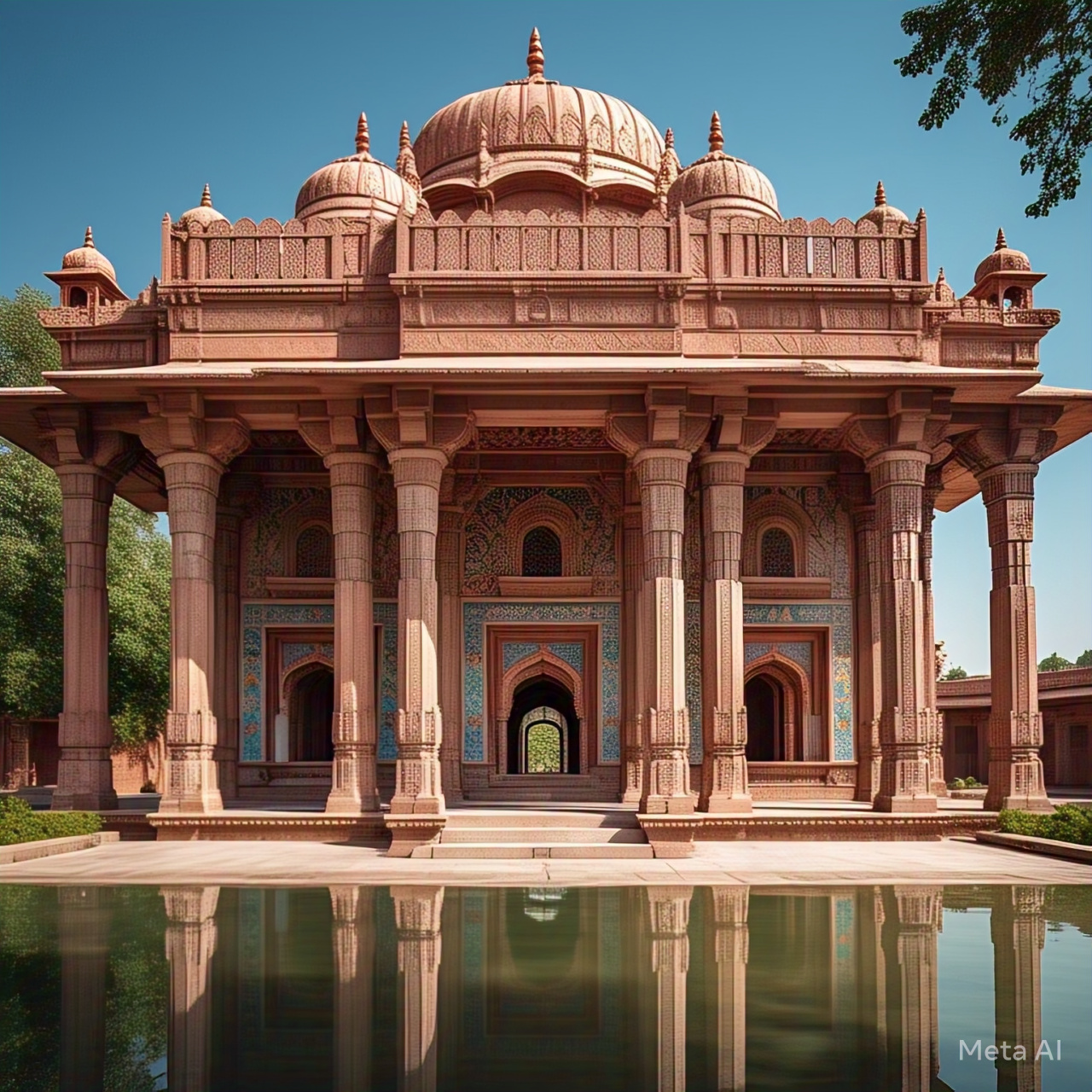
From ancient temples to modern marvels, explore the diverse architectural heritage of India
A grand Hindu temple constructed at the birthplace of Lord Rama in Ayodhya. It exemplifies traditional Nagara-style architecture and serves as a major spiritual and cultural landmark.
An ivory-white marble mausoleum built by Emperor Shah Jahan in memory of his wife Mumtaz Mahal, combining Persian, Islamic, and Indian architectural styles.
A 13th-century Sun temple known for its exquisite stone carvings and architectural grandeur, designed as a massive chariot with intricately carved wheels, pillars, and walls.
A historic Hindu temple dedicated to Goddess Meenakshi, known for its towering gopurams (gateway towers) covered with thousands of colorful sculptures.
A palace in Jaipur known as the "Palace of Winds," featuring a unique five-story facade with 953 small windows designed to allow royal ladies to observe street festivals without being seen.
Ancient rock-cut Buddhist cave monuments dating from the 2nd century BCE to about 480 CE, featuring paintings and sculptures considered masterpieces of Buddhist religious art.
A 73-meter tall minaret built in the early 13th century, known for its distinctive red sandstone construction and intricate carvings of verses from the Quran.
A Bahá'í House of Worship completed in 1986, notable for its flowerlike shape inspired by the lotus flower, built with white marble.
A historical palace and the official residence of the Wadiyar dynasty, known for its Indo-Saracenic style of architecture blending Hindu, Muslim, Rajput, and Gothic styles.
A large marble building built between 1906 and 1921 in memory of Queen Victoria, combining British and Mughal elements with Venetian, Egyptian, Deccani, and Islamic architectural influences.
A UNESCO World Heritage Site featuring 34 monasteries and temples, extending over more than 2 km, with Buddhist, Hindu and Jain monuments dating from 600 to 1000 CE.
The holiest gurdwara of Sikhism, known for its distinctive gold-plated sanctum surrounded by a large lake, blending Hindu and Islamic architectural elements.
A city founded in the 16th century by Emperor Akbar, featuring a unique blend of Hindu and Muslim architectural elements, including the famous Buland Darwaza.
The world's tallest statue, dedicated to Sardar Vallabhbhai Patel, symbolizing national unity and integrity, located near the Sardar Sarovar Dam.
Indian temple architecture developed distinct regional styles, from the Nagara style of North India to the Dravidian style of South India. Temples were not just places of worship but also centers of art, education, and community life.
The Mughals brought with them Persian, Turkish, and Islamic architectural influences, creating a distinctive Indo-Islamic style characterized by domes, arches, and intricate ornamentation, with the Taj Mahal being its most celebrated example.
During the British colonial period, European architectural styles were adapted to Indian conditions, resulting in Indo-Saracenic architecture that blended Gothic, Neo-Classical, and Renaissance elements with traditional Indian features.
India's architectural story moves through Buddhist stupas, rock-cut caves, Dravidian temple cities, Indo-Islamic Mughal grandeur, Indo-Saracenic colonial mash-ups and modernist independence-era civic design.
Highlights include Sanchi's 3rd-century BCE stupa, the Ajanta and Ellora caves, the Brihadeeswarar Temple in Thanjavur (a 1,000-year-old engineering marvel), the Taj Mahal, Hampi's ruined capital, Qutub Minar, Khajuraho's Chandela temples, Konark Sun Temple and Le Corbusier's Chandigarh.
Each region developed its own grammar: Nagara in the north (curved spires), Dravidian in the south (stepped towers and gopurams), Vesara in the Deccan (a hybrid), Indo-Islamic in Delhi and Agra, and Indo-Saracenic across colonial-era public buildings.
UNESCO sites
42
Architectural styles
8 major
Oldest standing
Sanchi Stupa (3rd c. BCE)
Most visited monument
Taj Mahal