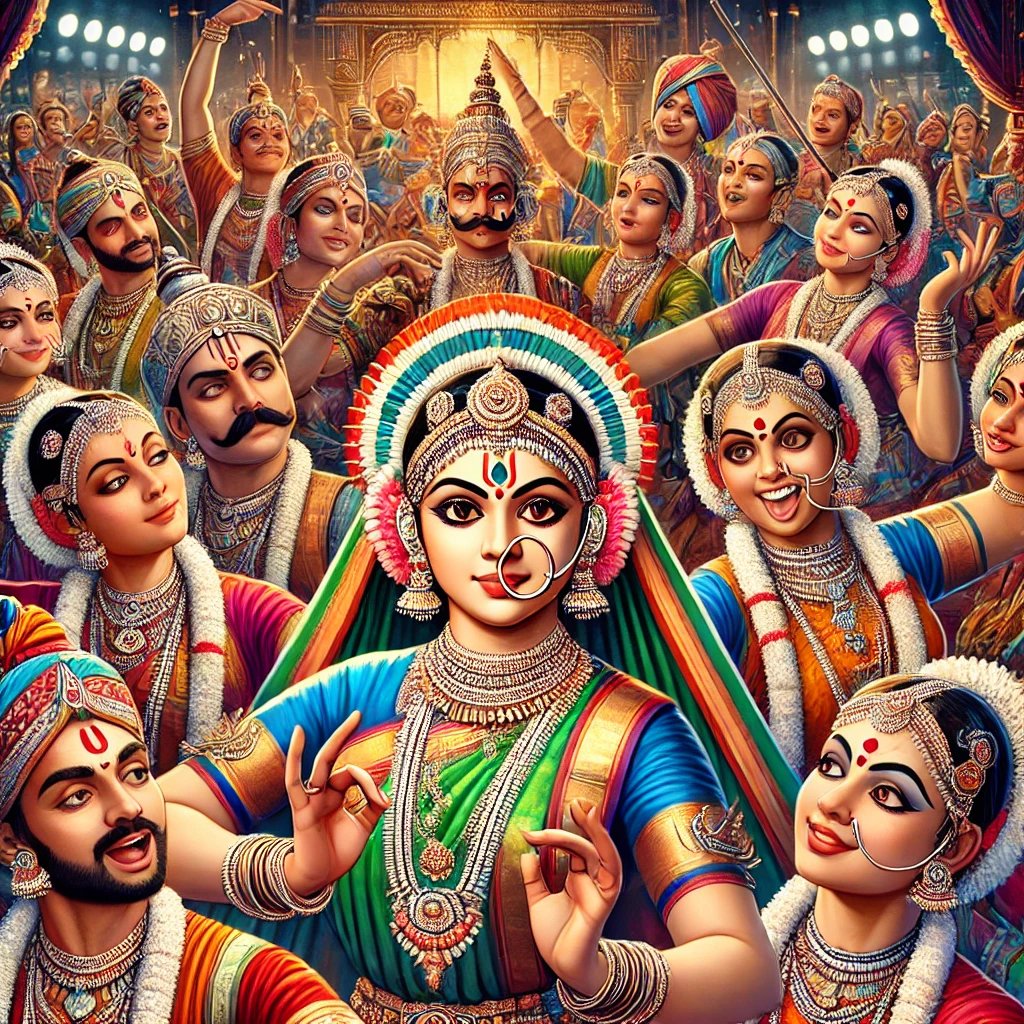
Classical Dances
Every classical dance is set to live classical music.
Explore the rich heritage of Indian classical music traditions and the diverse array of musical instruments.
Hindustani classical music is the traditional music of Northern India. It evolved from ancient Hindu musical traditions and was influenced by Persian music during the Mughal era. Key features include:
Carnatic music is the classical music tradition of South India. It has remained relatively unchanged since the 17th century and is deeply rooted in Hindu traditions. Key features include:
Discover the diverse array of musical instruments that form the backbone of Indian classical music
A plucked stringed instrument used in Hindustani classical music, with a long neck and a resonating gourd.
A pair of hand drums used in Hindustani classical music, consisting of a small right-hand drum and a larger left-hand drum.
An ancient string instrument used in Carnatic music, with a large resonator and a long neck with 24 frets.
A stringed instrument used in Hindustani classical music known for its deep, weighty, introspective sound.
A percussion instrument from South India used in Carnatic music, made of a single piece of wood hollowed out from the inside.
A side-blown bamboo flute used in Hindustani classical music, known for its sweet and mellow tone.
A trapezoid-shaped hammered dulcimer with 72 strings, popular in Hindustani classical music.
A double reed wind instrument with a distinctively haunting sound, traditionally played at weddings and temples.
A clay pot percussion instrument used in Carnatic music, played by striking with hands, fingers, and thumbs.
A bowed string instrument that closely resembles the human voice, used in Hindustani classical music.
A double reed wind instrument from South India with a loud, piercing tone, often played in temples and processions.
A barrel-shaped two-headed drum, the predecessor of the tabla, used in Dhrupad style of Hindustani music.
India's music splits into two great classical traditions — Hindustani in the north and Carnatic in the south — both built on the universal grammar of raga (melody) and tala (rhythm).
Hindustani music developed under both Hindu temple and Mughal court patronage, producing gharanas (lineages) like Gwalior, Agra, Kirana and Patiala. Stars include Ravi Shankar (sitar), Bismillah Khan (shehnai), Pandit Bhimsen Joshi (vocal) and Zakir Hussain (tabla).
Carnatic music, more compositionally driven, was shaped by the Trinity — Tyagaraja, Muthuswami Dikshitar and Syama Sastri — and continues through artists like M.S. Subbulakshmi, Lalgudi Jayaraman and Sanjay Subrahmanyan. Beyond the classical lies folk (Lavani, Baul, Bhangra), devotional (bhajan, qawwali) and the world's largest film-music industry.
Major traditions
2 classical
Ragas in use
300+ commonly
Talas common
7 most used
UNESCO heritage
Vedic chant, Manipuri Sankirtana