Sound
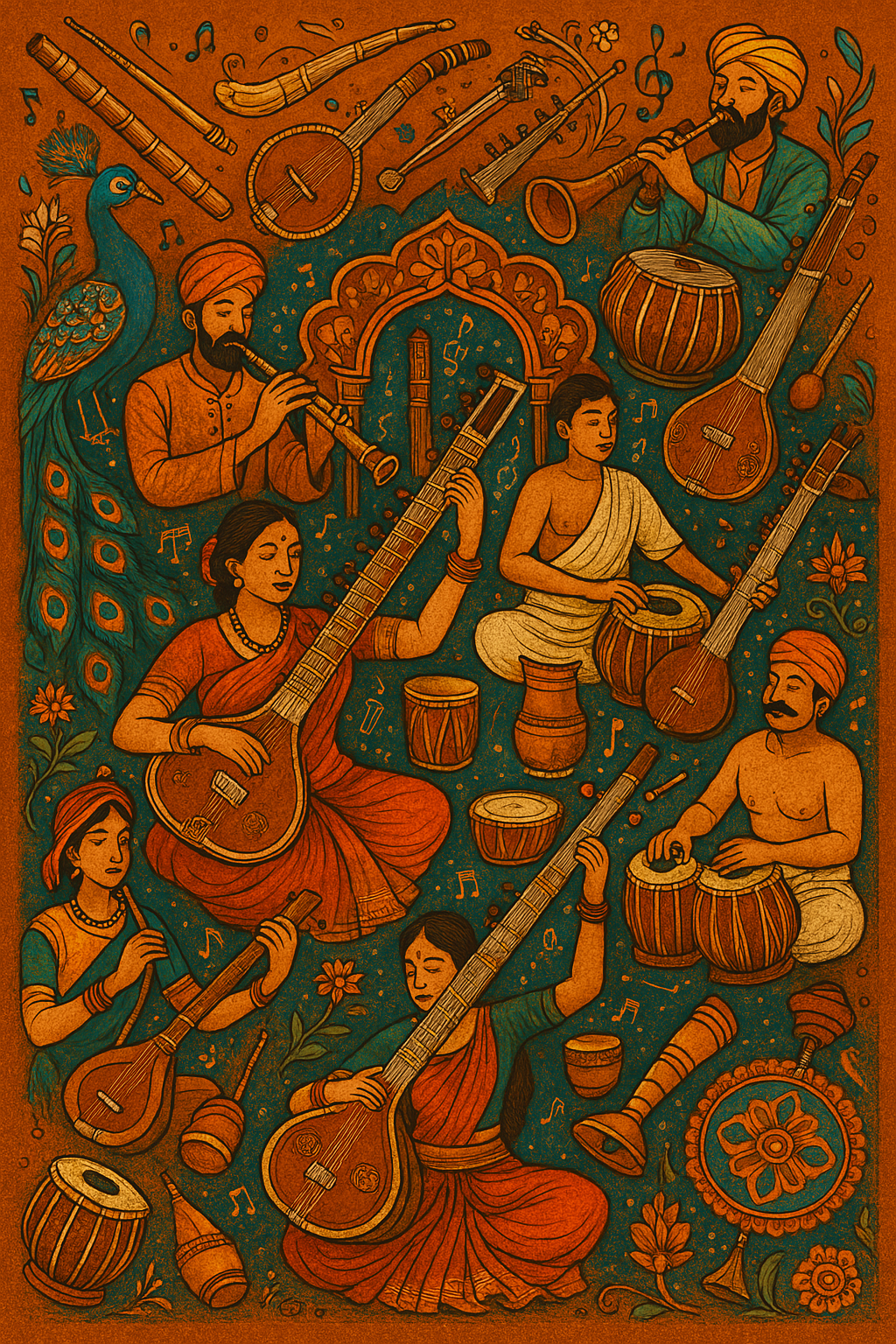
Indian Music
Hindustani and Carnatic music — the backbone of every classical dance.
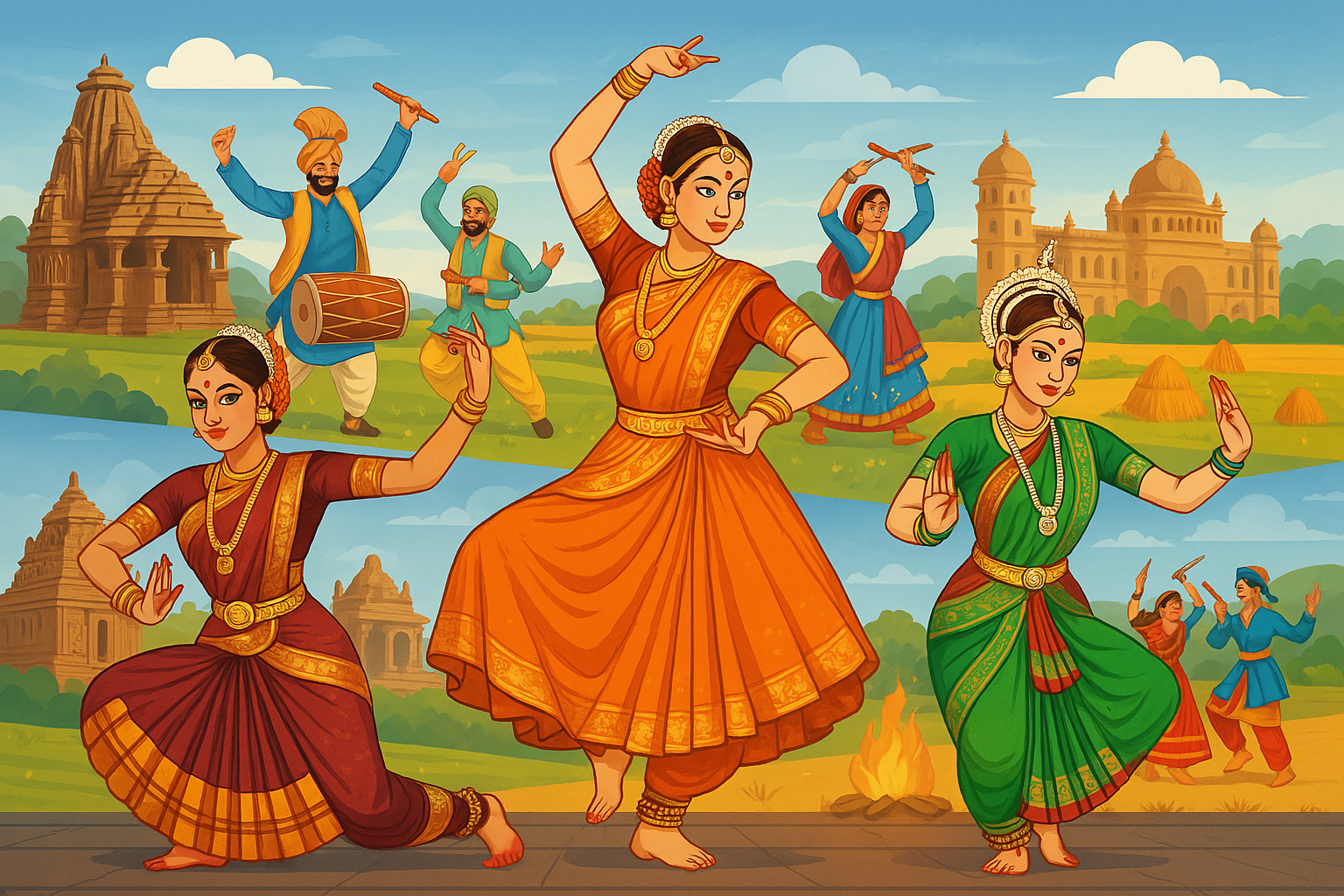
Explore the rich diversity of Indian dance forms, from ancient classical traditions to vibrant folk performances.
Indian dance forms are a vibrant expression of the country's cultural heritage, with traditions dating back thousands of years. Each dance form tells a story through a unique vocabulary of movements, expressions, and rhythms, reflecting the diversity of India's regions and communities.
Classical dances like Bharatanatyam, Kathak, and Odissi have their roots in ancient texts such as the Natya Shastra and were traditionally performed in temples and royal courts. Folk dances, on the other hand, emerged from the daily lives, celebrations, and rituals of common people, often marking seasonal changes, harvests, and festivals.
An energetic folk dance from Punjab, traditionally associated with the harvest festival of Baisakhi.
A traditional folk dance from Gujarat performed during Navratri, involving circular movements and clapping.
A folk dance from Assam performed during the Bihu festival, characterized by brisk movements and colorful costumes.
A traditional folk dance from Maharashtra known for its powerful rhythm and sensuous movements.
A traditional folk dance from Rajasthan performed by women in swirling robes, symbolizing feminine grace.
A semi-classical dance form from eastern India that combines martial arts, acrobatics, and athletics.
Both classical and folk dance traditions continue to evolve while preserving their unique characteristics. Many contemporary dance forms draw inspiration from these rich traditions, creating new expressions that honor India's cultural heritage while embracing modern influences.
India officially recognises eight classical dance forms, each rooted in the Natya Shastra (the ancient Sanskrit treatise on performing arts) but developed in distinct regions over centuries.
Bharatanatyam (Tamil Nadu) is the oldest and best known internationally — sharply geometric, deeply devotional. Kathak (North India) tells stories with rapid footwork and spins, drawing from both Hindu and Mughal courts.
Kathakali and Mohiniyattam are Kerala's twin traditions: Kathakali with its elaborate green-faced makeup and martial vigour; Mohiniyattam with graceful, flowing femininity. Kuchipudi (Andhra Pradesh), Odissi (Odisha), Manipuri (Manipur) and Sattriya (Assam) round out the eight.
Beyond these classical forms, India has hundreds of folk dances — Bhangra, Garba, Lavani, Bihu, Ghoomar — that breathe at every wedding, harvest and festival.
Recognised classical forms
8
Oldest tradition
Bharatanatyam (~2,000 yrs)
UNESCO heritage
Kutiyattam, Sankirtana
Folk dances
100+ documented
Tamil Nadu — geometric, devotional, the gold standard of Indian classical dance.
North India — storytelling through footwork and spins, blending Hindu and Mughal traditions.
Kerala — elaborate makeup and costumes, dramatising stories from the Ramayana and Mahabharata.
Odisha — sculptural poses inspired by temple carvings; reconstructed in the 20th century from temple frescoes.