Music
Indian film music is its own enormous genre, from R.D. Burman to A.R. Rahman.
Explore the vibrant world of Indian cinema, music, television, and theatrical traditions that captivate audiences worldwide.
Indian cinema, often collectively known as Indian films, is the largest film industry in the world in terms of the number of films produced. With its diverse regional film industries, including Bollywood (Hindi), Tollywood (Telugu), Kollywood (Tamil), and many others, India produces over 1,500 films annually in more than 20 languages.
What makes Indian cinema unique is its blend of music, dance, drama, and spectacle, creating a distinctive cinematic experience that has gained global recognition. From the artistic masterpieces of Satyajit Ray to the blockbuster extravaganzas of contemporary filmmakers, Indian cinema offers a rich tapestry of storytelling that reflects the country's cultural diversity and creative talent.
The Hindi-language film industry based in Mumbai, known for its colorful, musical, and often melodramatic films that have gained global popularity.
The Kannada-language film industry based in Bengaluru, known for its rich storytelling, socially conscious themes, and contributions to parallel cinema.
The Tamil-language film industry based in Chennai, known for its social themes, technical excellence, and global reach through the Tamil diaspora.
The Telugu-language film industry based in Hyderabad, known for its grand productions, action sequences, and mythological themes.
The Bengali-language film industry based in Kolkata, known for its intellectual content, artistic sensibilities, and the works of legendary directors like Satyajit Ray.
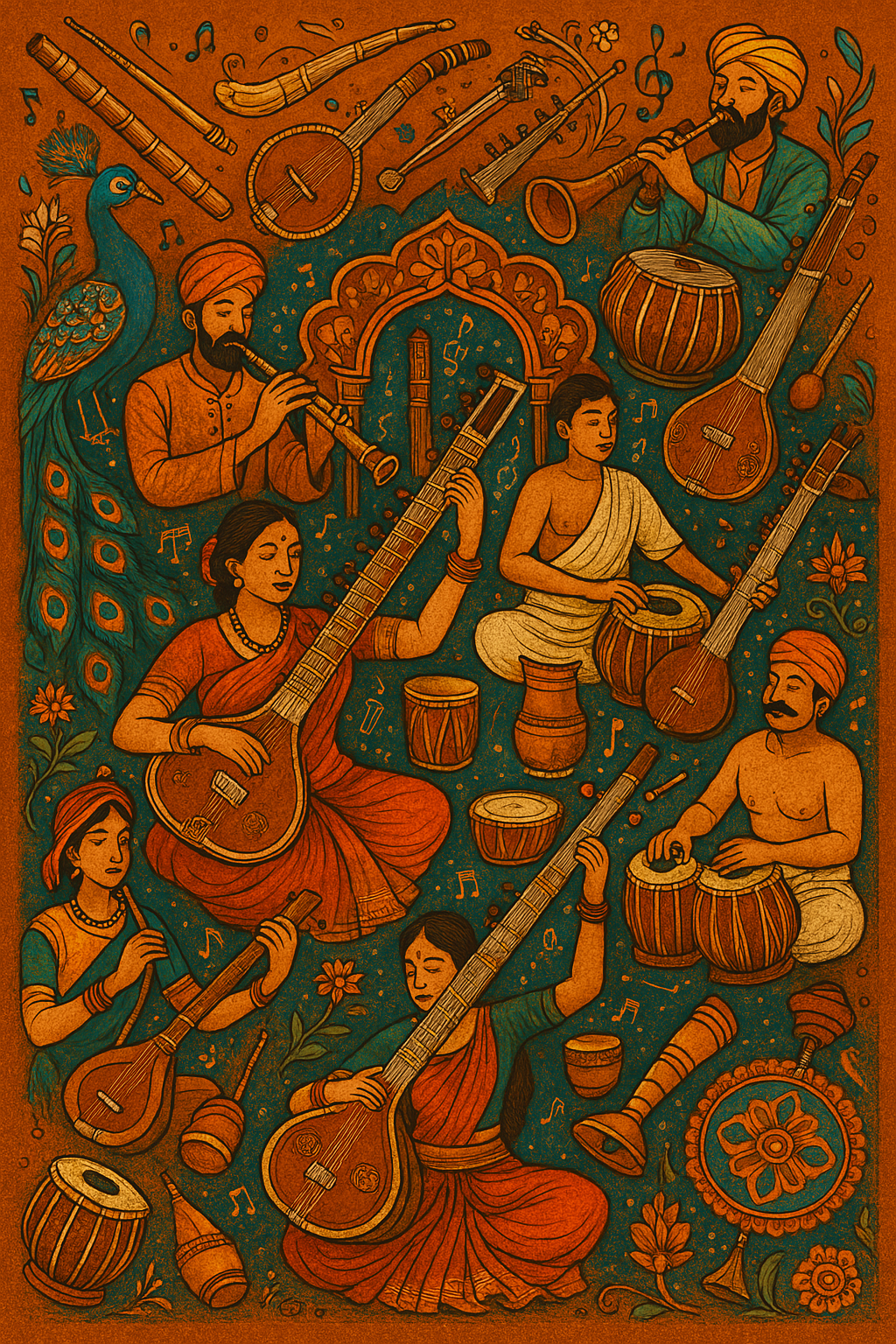
The rich traditions of Hindustani and Carnatic classical music, featuring ragas, talas, and improvisation, that have evolved over centuries.
The television industry in India, featuring a diverse range of content from soap operas and reality shows to mythological dramas and educational programs.
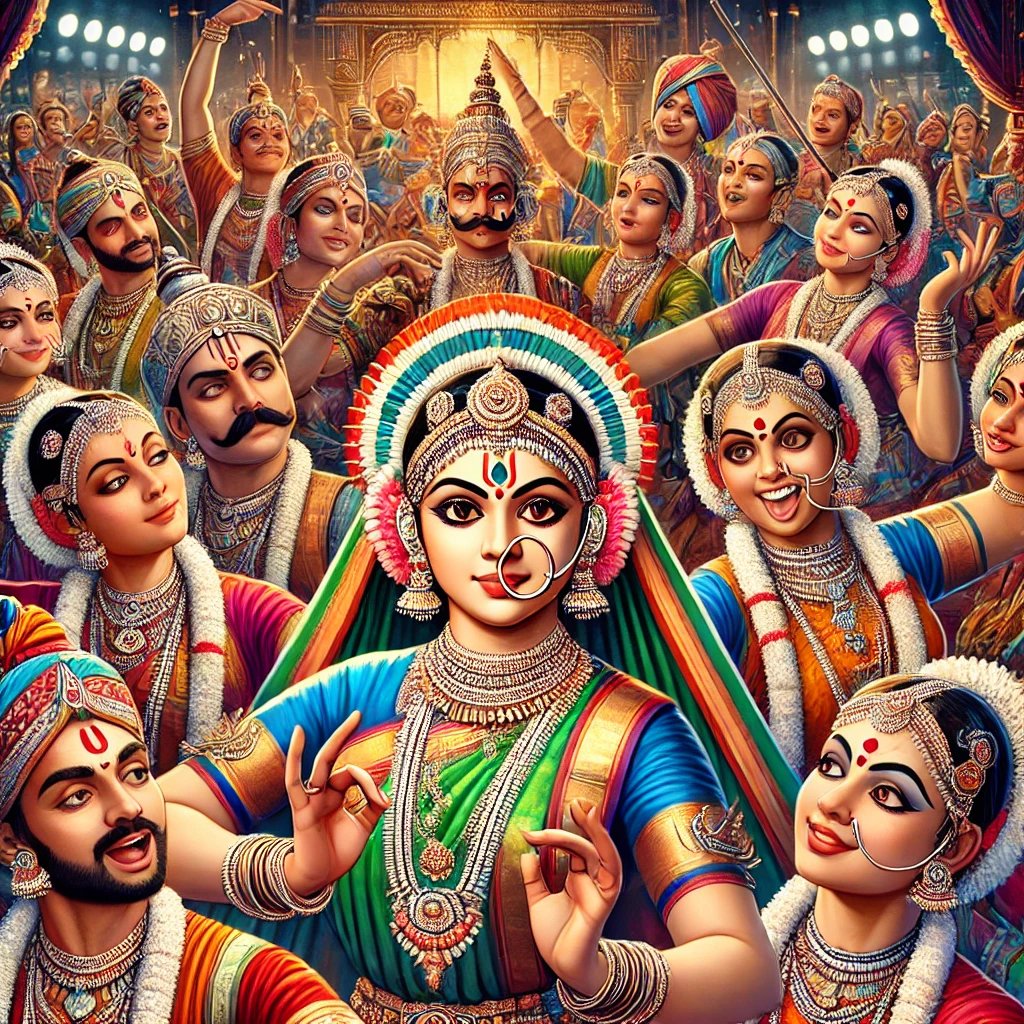
Traditional theatrical forms from various regions of India, such as Jatra, Nautanki, Tamasha, and Yakshagana, that combine music, dance, and drama.
A film movement that emerged in the 1950s as an alternative to mainstream commercial cinema, focusing on realism, social issues, and artistic expression.
The Malayalam-language film industry based in Kerala, known for its realistic storytelling, social commentary, and artistic innovation.
The Marathi-language film industry based in Maharashtra, known for its strong narratives, cultural themes, and recent renaissance in quality filmmaking.
The growing independent film movement in India that explores unconventional themes and storytelling techniques outside the mainstream commercial framework.
The vibrant music industry associated with Hindi cinema, featuring film soundtracks, playback singers, and evolving musical styles that have influenced global pop culture.
Director: Satyajit Ray
Significance: First film in the acclaimed Apu Trilogy, won multiple international awards
Director: Mehboob Khan
Significance: Epic drama that was India's first Oscar-nominated film
Director: Ramesh Sippy
Significance: Iconic action-adventure film that defined the masala film genre
Director: Ashutosh Gowariker
Significance: Period sports drama that was nominated for an Academy Award
Director: S.S. Rajamouli
Significance: Epic fantasy duology that broke numerous box office records
Director: S.S. Rajamouli
Significance: Action drama that won an Academy Award for Best Original Song
Director: K. Asif
Significance: Historical epic considered one of the greatest Indian films ever made
Director: Guru Dutt
Significance: Poetic masterpiece exploring the struggles of an artist in post-independence India
Music is an integral part of Indian cinema, with songs and dance sequences serving as essential elements of storytelling. Unlike many Western films, where music often plays a background role, Indian films incorporate songs as a means to express emotions, advance the plot, or provide entertainment.
The music directors (composers), lyricists, and playback singers of Indian cinema have achieved legendary status, with their work often becoming more popular than the films themselves. From the classical-inspired compositions of the early era to the diverse genres of contemporary film music, the soundtrack of Indian cinema reflects the country's rich musical heritage and its openness to global influences.
Notable music directors like R.D. Burman, A.R. Rahman, and Ilaiyaraaja, lyricists like Gulzar and Javed Akhtar, and singers like Lata Mangeshkar, Kishore Kumar, and S.P. Balasubrahmanyam have contributed immensely to the cultural impact of Indian cinema through their musical creations.
Indian entertainment has expanded its reach far beyond the country's borders, influencing global popular culture in numerous ways:
Indian films and television shows serve as cultural connections for the large Indian diaspora worldwide, helping maintain ties to their heritage.
Indian films regularly feature at prestigious international film festivals, with directors like Satyajit Ray, Mira Nair, and Shekhar Kapur gaining global acclaim.
The energetic and colorful dance sequences from Indian films have inspired dance forms and fitness routines around the world.
Collaborations between Indian and international filmmakers, actors, and technicians have increased, creating truly global productions.
Streaming services have made Indian content more accessible globally, introducing new audiences to the diversity of Indian entertainment.
Indian entertainment has facilitated cultural exchange, promoting understanding and appreciation of Indian traditions, values, and perspectives.
India produces 1,500–2,000 films a year across 20+ languages — more than any other country. Bollywood (Hindi) is the most internationally famous, but Tollywood (Telugu), Kollywood (Tamil), Mollywood (Malayalam) and Sandalwood (Kannada) are equally vibrant.
Indian cinema began with Dadasaheb Phalke's 1913 silent film Raja Harishchandra. It exploded in the 1950s "golden age" with Raj Kapoor, Guru Dutt and Mehboob Khan. The 1970s gave us Amitabh Bachchan and the "angry young man" era; the 1990s brought romantic blockbusters with Shah Rukh Khan, Aamir Khan and Salman Khan.
In recent years, Telugu films like Baahubali and RRR, Tamil films like Kabali and Vikram, and Malayalam parallel cinema have reset what global audiences expect from Indian film.
Films produced annually
~1,800
Languages
20+
First Indian film
Raja Harishchandra (1913)
Highest-grossing
Pushpa 2 / Baahubali 2 / Dangal