
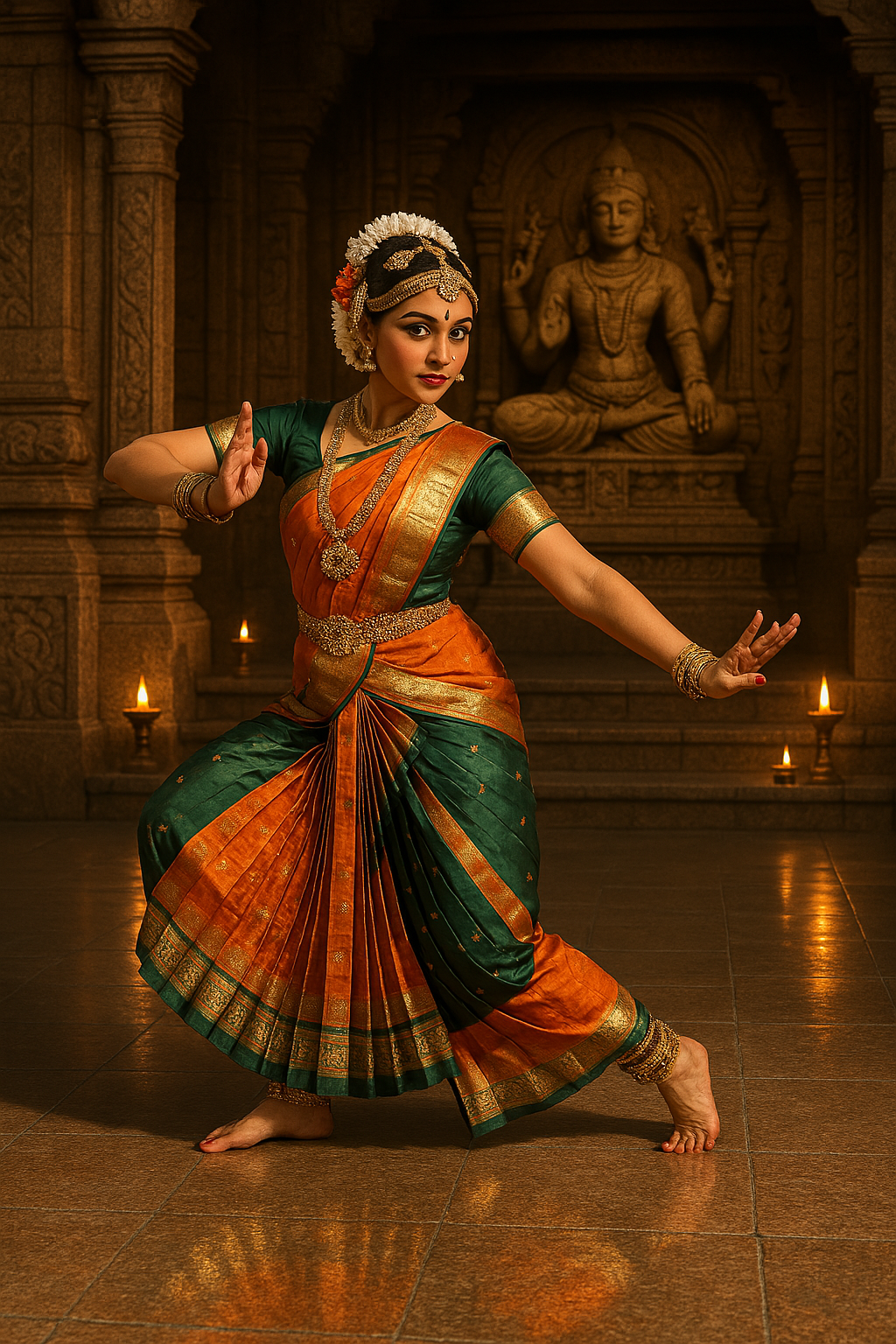
Bharatanatyam
Bharatanatyam is one of the oldest classical dance forms of India, originating in the temples of Tamil Nadu. It is known for its fixed upper torso, bent-knee (aramandi) stance, intricate footwork, expressive hand gestures (mudras) and storytelling through abhinaya.
Quick facts: Bharatanatyam
| Origin | Tamil Nadu (temple dance / Sadir) |
|---|---|
| Signature posture | Aramandi (half-sitting) |
| Elements | Nritta, Nritya, Natya |
| Accompaniment | Carnatic music, mridangam, nattuvangam |
| Key reviver | Rukmini Devi Arundale |
Origin & history
Bharatanatyam evolved from Sadir, the dance performed by devadasis in the temples of Tamil Nadu, and is codified in the ancient Sanskrit treatise Natya Shastra by Bharata Muni. It was revived and brought to the proscenium stage in the early 20th century, notably by Rukmini Devi Arundale and E. Krishna Iyer.
Characteristics & technique
The style balances nritta (pure rhythmic dance), nritya (expressive dance) and natya (drama). Dancers hold geometric lines and the signature aramandi half-sitting posture, combining crisp footwork with over 50 hand gestures and detailed facial abhinaya to convey emotion (rasa).
Costume & appearance
Performers wear a brightly coloured silk sari stitched into a costume with a pleated fan that opens during aramandi, temple jewellery, a decorated hair braid, and ankle bells (ghungroo). The feet and hands are often reddened with alta.
Repertoire
A traditional Bharatanatyam recital (margam) follows a sequence: Alarippu, Jatiswaram, Shabdam, Varnam (the centrepiece), Padam, Javali and the concluding Thillana.
Frequently asked questions about Bharatanatyam
What is Bharatanatyam?
Bharatanatyam is a classical Indian dance from Tamil Nadu, one of the oldest dance forms, known for its bent-knee aramandi posture, intricate footwork, hand gestures (mudras) and expressive storytelling (abhinaya) set to Carnatic music.
Where did Bharatanatyam originate?
Bharatanatyam originated in the Hindu temples of Tamil Nadu, evolving from the Sadir dance of the devadasis, and is rooted in the ancient treatise Natya Shastra.
What is the difference between Bharatanatyam and Kathak?
Bharatanatyam is a South Indian temple dance with a grounded aramandi posture and Carnatic music; Kathak is a North Indian dance with upright posture, fast spins (chakkar) and Hindustani music.
What is a Bharatanatyam margam?
The margam is the traditional recital sequence: Alarippu, Jatiswaram, Shabdam, Varnam, Padam, Javali and Thillana, moving from pure dance to expressive storytelling and back.