
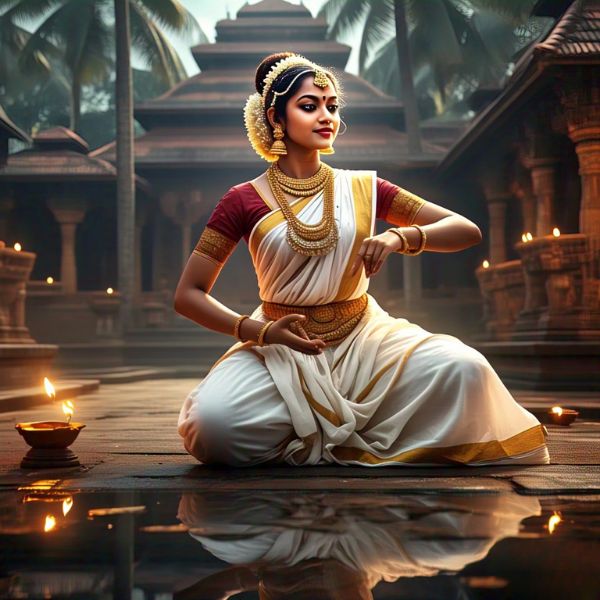
Mohiniyattam
Mohiniyattam is a graceful solo classical dance from Kerala, its name meaning the “dance of Mohini”, the enchantress avatar of Vishnu. It is defined by soft, swaying, feminine movement (lasya) and subtle, tender expression.
Quick facts: Mohiniyattam
| Origin | Kerala |
|---|---|
| Meaning | Dance of Mohini (the enchantress) |
| Style | Lasya — gentle, swaying, feminine |
| Signature costume | White-and-gold Kasavu sari |
| Key patrons/revivers | Swathi Thirunal, Vallathol |
Origin & history
Mohiniyattam draws on Kerala’s temple and folk traditions and was refined under royal patronage in the 18th–19th centuries, notably by the ruler Swathi Thirunal. It was later revived by poet Vallathol Narayana Menon at the Kerala Kalamandalam.
Characteristics & technique
The style is built on gentle, circular, pendulum-like swaying of the torso and hips, delicate footwork and refined abhinaya, creating a mood of grace and allure rather than vigour.
Costume & appearance
The signature look is an off-white or cream Kasavu sari with a gold border, minimal but elegant jewellery, and hair tied in a bun to one side adorned with jasmine flowers.
Repertoire
The repertoire parallels Bharatanatyam’s margam — Cholkettu, Jatiswaram, Varnam, Padam and Thillana — set to Carnatic and Sopana music.
Frequently asked questions about Mohiniyattam
What is Mohiniyattam?
Mohiniyattam is a graceful solo classical dance from Kerala, meaning the “dance of the enchantress” (Mohini). It is known for soft, swaying, feminine movement (lasya) and delicate expression, performed in a white-and-gold sari.
What does Mohiniyattam mean?
The name comes from Mohini, the enchantress female avatar of Lord Vishnu, and “attam” meaning dance — literally the dance of the enchantress.
What is the costume of Mohiniyattam?
The dancer wears an off-white or cream Kasavu sari with a gold border, simple gold jewellery, and jasmine flowers in a side bun, giving a serene, elegant appearance.
How is Mohiniyattam different from Bharatanatyam?
Both use Carnatic music and a similar recital structure, but Mohiniyattam is defined by gentle, swaying lasya movement and understated grace, whereas Bharatanatyam is more sculptural and vigorous.