
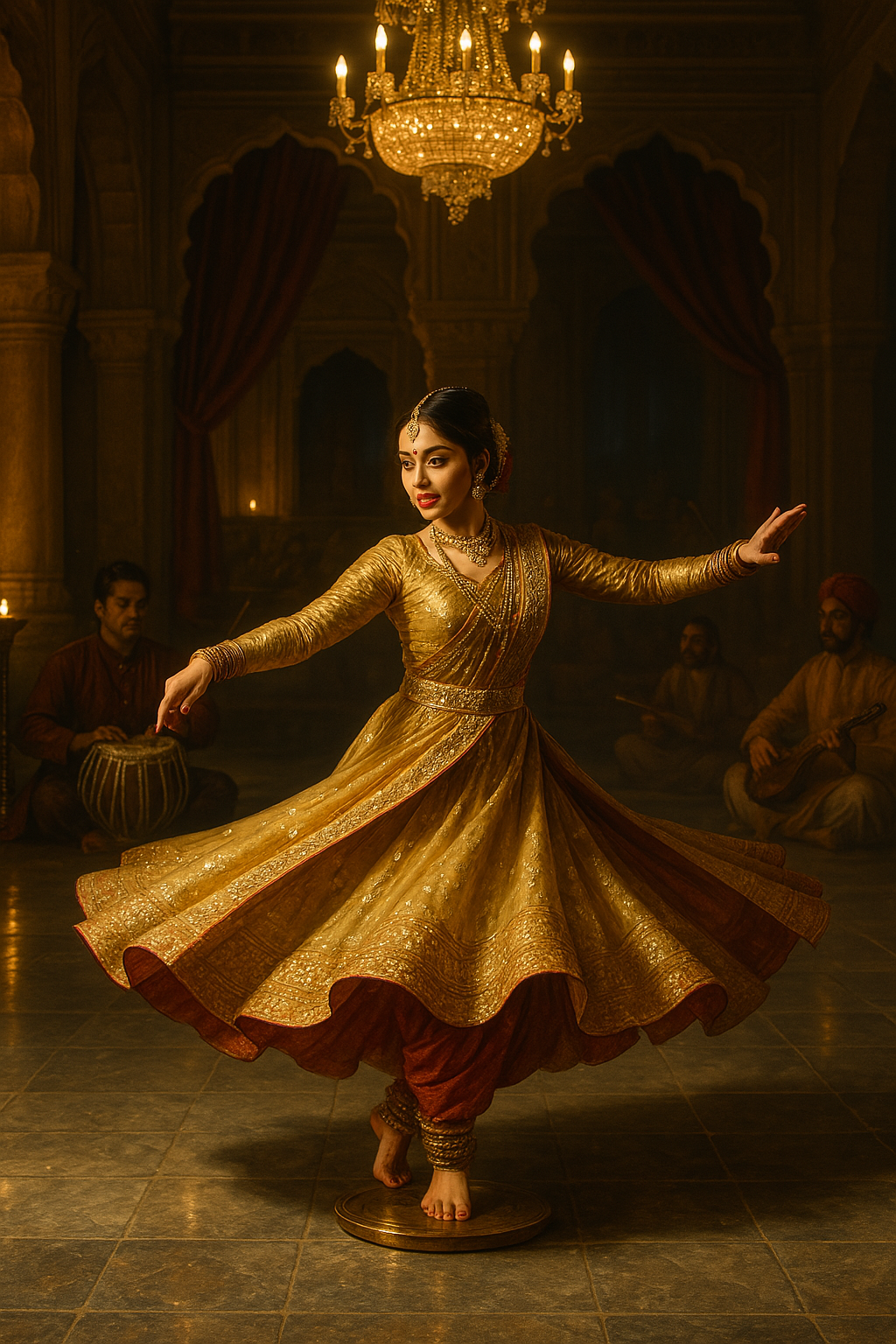
Kathak
Kathak is a North Indian classical dance form known for rhythmic footwork (tatkaar), rapid pirouettes (chakkar), and expressive storytelling. Its name derives from “katha” (story), reflecting its roots in the storytelling traditions of travelling bards.
Quick facts: Kathak
| Origin | North India (Uttar Pradesh) |
|---|---|
| Signature moves | Chakkar (spins), tatkaar (footwork) |
| Three gharanas | Lucknow, Jaipur, Banaras |
| Accompaniment | Hindustani music, tabla, sarangi |
| Meaning | “Katha” = story |
Origin & history
Kathak grew from the Kathakars, wandering storytellers of North India, and flourished in both temple and Mughal courtly settings, absorbing Persian and Central Asian influences. This dual heritage gives it both devotional and courtly repertoire.
Characteristics & technique
Dancers stand upright (unlike the grounded Bharatanatyam) and dazzle with intricate rhythmic footwork amplified by ankle bells, lightning spins, and subtle facial abhinaya. Compositions are built around the interplay of dancer and tabla, using patterns like tukra, tihai and paran.
Costume & appearance
Costumes vary by tradition: the Hindu style uses a lehenga-choli or a long angarkha, while the Mughal-influenced style features a flared kurta (angarkha) and churidar. Dancers wear heavy ghungroo, sometimes numbering over a hundred bells per ankle.
Repertoire
A recital moves through invocation (vandana), technical passages (that, aamad, tukra, tarana) and expressive storytelling (bhava/abhinaya), often depicting tales of Krishna and Radha.
Frequently asked questions about Kathak
What is Kathak?
Kathak is a North Indian classical dance known for rhythmic footwork, fast spins (chakkar) and expressive storytelling, performed to Hindustani music. Its name comes from “katha”, meaning story.
What are the gharanas of Kathak?
Kathak has three main gharanas (schools): Lucknow (known for grace and abhinaya), Jaipur (known for powerful footwork and spins) and Banaras.
Why does Kathak have Mughal influence?
Kathak developed in both temples and Mughal courts, so it absorbed Persian and courtly elements alongside its Hindu devotional roots, giving it a distinctive dual repertoire.
What is tatkaar in Kathak?
Tatkaar is the basic rhythmic footwork of Kathak, where the dancer produces intricate patterns with the feet and ankle bells in time with the tabla.