
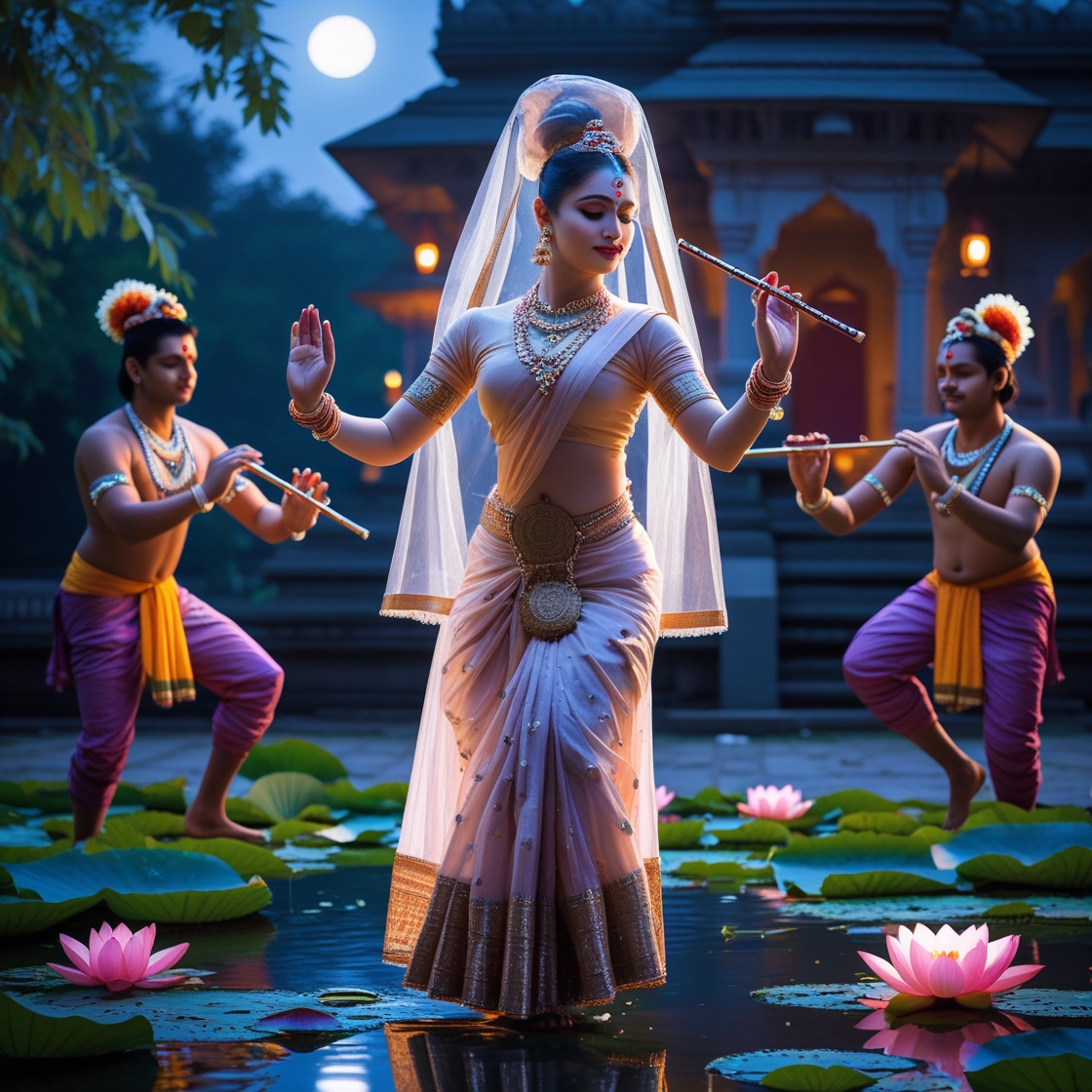
Manipuri
Manipuri is a classical dance from the northeastern state of Manipur, characterised by gentle, rounded and graceful movements rather than sharp lines or forceful footwork. It is deeply devotional, centred on the theme of Radha and Krishna, especially the Ras Lila.
Quick facts: Manipuri
| Origin | Manipur (northeast India) |
|---|---|
| Theme | Radha–Krishna, Ras Lila |
| Signature costume | Kumil (barrel-shaped skirt) |
| Style | Gentle, rounded, devotional |
| Male forms | Pung Cholom, Kartal Cholom |
Origin & history
Manipuri dance is rooted in the ancient culture of Manipur and was shaped by Vaishnavism, which spread in the region from the 18th century, weaving Krishna devotion into indigenous ritual dance.
Characteristics & technique
Movements are soft, flowing and understated, with the face usually serene rather than dramatically expressive. The dance avoids the heavy heel-stamping of other styles; footwork is light, and the body moves in gentle curves and figure-eights.
Costume & appearance
The female costume is the striking Kumil — a stiff, barrel-shaped, richly embroidered skirt with a translucent veil over the face — instantly distinguishing Manipuri from every other classical style.
Repertoire
Key forms include the Ras Lila (episodes of Krishna and the gopis) and the vigorous male drum dances such as Pung Cholom and Kartal Cholom.
Frequently asked questions about Manipuri
What is Manipuri dance?
Manipuri is a classical dance from Manipur known for its gentle, graceful, rounded movements and devotion to Krishna, especially through the Ras Lila. It avoids the sharp lines and forceful footwork of other classical styles.
What is the Ras Lila in Manipuri?
The Ras Lila depicts the divine dance of Krishna with Radha and the gopis, and is the devotional heart of Manipuri dance, performed with soft, flowing movement.
What is the Manipuri costume called?
The distinctive female costume is the Kumil — a stiff, barrel-shaped, embroidered skirt worn with a translucent veil over the face.
How is Manipuri different from other classical dances?
Manipuri emphasises gentle, curved, understated movement and serene expression, avoiding the heavy footwork and dramatic abhinaya characteristic of Bharatanatyam, Kathak or Kathakali.