
Odissi
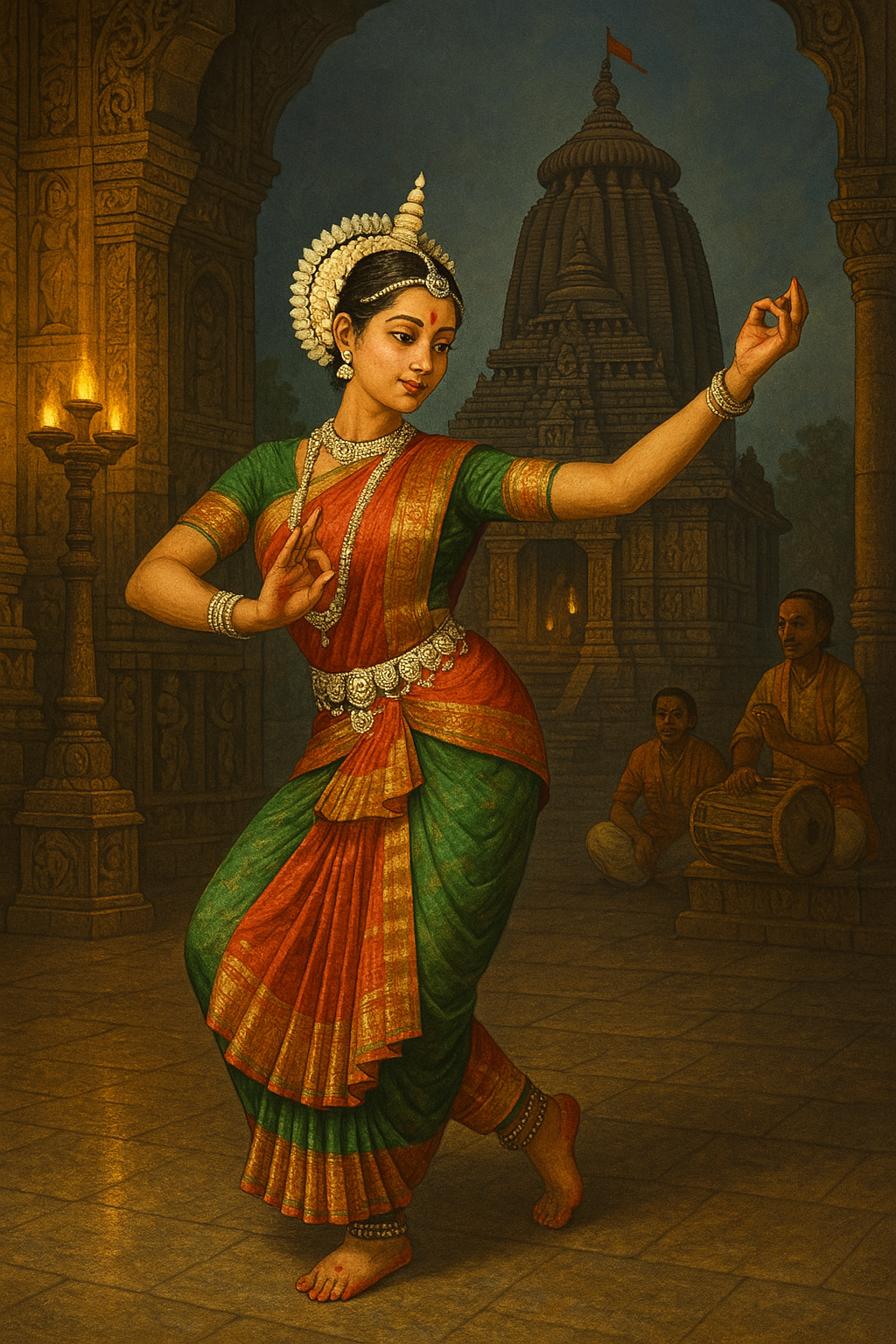
Odissi is one of the oldest surviving classical dances of India, originating in the temples of Odisha. It is known for its lyrical, sculptural quality, the signature tribhangi (three-bend) posture and the square chowk stance, evoking the poses of temple sculptures.
Quick facts: Odissi
| Origin | Odisha (temple dance) |
|---|---|
| Signature postures | Tribhangi, Chowk |
| Roots | Mahari and gotipua traditions |
| Literature | Gita Govinda (Jayadeva) |
| Style | Sculptural, lyrical |
Origin & history
Odissi descends from the maharis (temple dancers) of the Jagannath temple and the gotipua tradition of young boy dancers. Depicted in the carvings of Odisha’s temples, it was revived in the mid-20th century.
Characteristics & technique
The dance alternates the grounded, symmetrical chowk with the graceful, asymmetrical tribhangi, where the body bends at the neck, torso and knee. Fluid torso movement (as opposed to the more linear Bharatanatyam) and delicate abhinaya define its style.
Costume & appearance
Dancers wear a distinctive Odisha silk sari (often ikat), elaborate silver filigree (tarakasi) jewellery, a headpiece representing a temple tower or flowers, and ankle bells.
Repertoire
A recital typically includes Mangalacharan (invocation), Batu, Pallavi (pure dance), Abhinaya (expressive, often to Jayadeva’s Gita Govinda) and Moksha (the concluding release).
Frequently asked questions about Odissi
What is Odissi?
Odissi is a classical dance from Odisha, one of India’s oldest, known for its sculptural, lyrical style, the three-bend tribhangi posture and the square chowk stance, evoking temple sculpture.
What is tribhangi in Odissi?
Tribhangi is Odissi’s signature posture in which the body bends at three points — neck, torso and knee — creating a graceful, asymmetrical S-curve like the figures in Odisha’s temple carvings.
What are the origins of Odissi?
Odissi originated as a temple dance performed by the maharis of the Jagannath temple, along with the gotipua tradition of boy dancers, and is depicted in Odisha’s ancient temple sculptures.
What music accompanies Odissi?
Odissi is performed to Odissi classical music, and expressive pieces are often set to Jayadeva’s 12th-century Sanskrit poem, the Gita Govinda.