
Kathakali
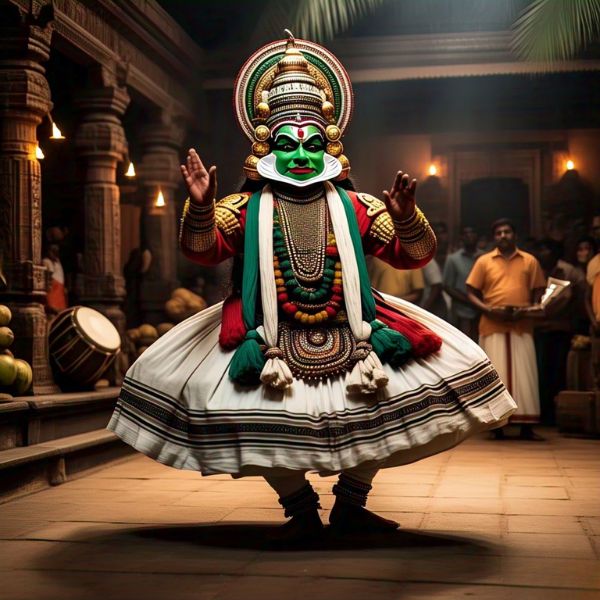
Kathakali is a classical dance-drama from Kerala, instantly recognisable by its elaborate makeup, towering headgear and voluminous costumes. It dramatises stories from the epics through a codified vocabulary of hand gestures (mudras) and intense facial expressions, with no spoken words by the dancer.
Quick facts: Kathakali
| Origin | Kerala (17th century) |
|---|---|
| Form | Dance-drama (no spoken words by dancer) |
| Signature | Chutti makeup, towering costume |
| Expression | 24 mudras, navarasa |
| Drums | Chenda, maddalam |
Origin & history
Kathakali took shape in the 17th century in Kerala, drawing on older temple and folk performance traditions such as Krishnanattam and Ramanattam. Stories are drawn largely from the Ramayana, Mahabharata and Puranas.
Characteristics & technique
Performers use 24 basic mudras (and hundreds of combinations) plus the navarasa (nine emotions) conveyed through precise control of the eyes, eyebrows and cheeks. Vocalists sing the narrative while the dancer enacts it, accompanied by chenda and maddalam drums.
Costume & appearance
Makeup (chutti) is applied over hours and colour-codes characters: green (pacha) for noble heroes, red (kathi) for anti-heroes, black for the fierce, and elaborate crowns and wide skirts complete the larger-than-life look.
Repertoire
Traditional performances are night-long enactments of a single epic episode (a “katha”), though modern staged versions are shorter.
Frequently asked questions about Kathakali
What is Kathakali?
Kathakali is a classical dance-drama from Kerala known for its elaborate makeup, towering costumes and codified hand gestures. Dancers enact stories from the epics through mudras and facial expression while vocalists sing the narrative.
What do the makeup colours mean in Kathakali?
Colours code character types: green (pacha) for noble heroes, red (kathi) for arrogant anti-heroes, black for hunters and demons, and special makeup for female and divine roles.
Does the Kathakali dancer speak or sing?
No. The dancer enacts the story silently through mudras and facial expression, while separate vocalists sing the narrative to the accompaniment of chenda and maddalam drums.
Where does Kathakali come from?
Kathakali originated in Kerala in the 17th century, developing from earlier temple and folk dance-drama traditions like Ramanattam and Krishnanattam.