
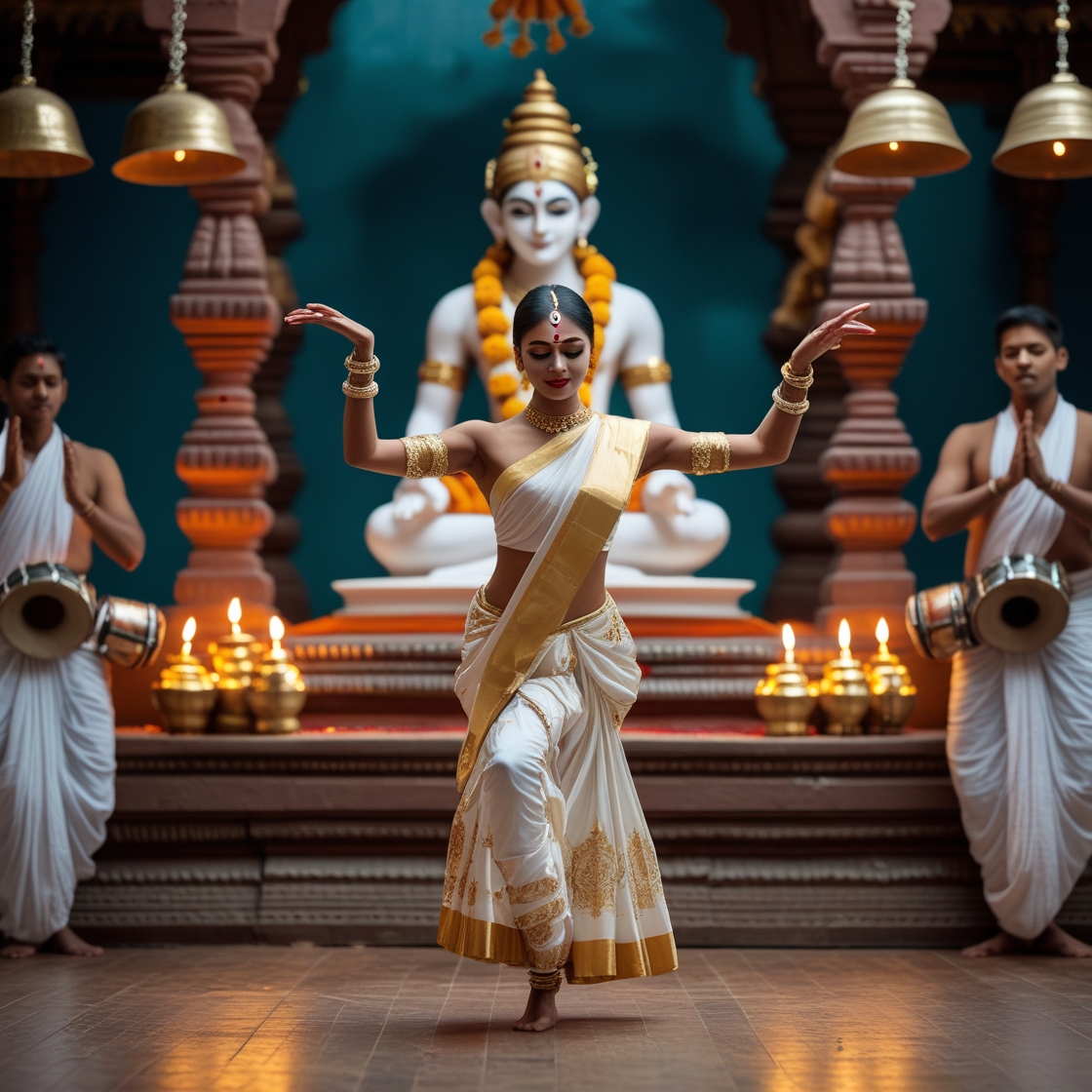
Sattriya
Sattriya is the classical dance of Assam, one of the eight recognised classical dance forms of India. It was born in the Vaishnava monasteries (sattras) of Assam and remains deeply devotional, blending rhythmic precision with expressive storytelling of Krishna’s life.
Quick facts: Sattriya
| Origin | Assam (Vaishnava sattras/monasteries) |
|---|---|
| Founder | Srimanta Sankardev (15th–16th c.) |
| Recognised classical | 2000 (Sangeet Natak Akademi) |
| Accompaniment | Khol drum, taal (cymbals) |
| Theme | Devotion to Krishna |
Origin & history
Sattriya was created in the 15th–16th century by the Assamese saint-reformer Srimanta Sankardev as part of his Bhakti (devotional) movement, performed in the sattras (monasteries) as a form of worship. It was recognised as a classical dance by Sangeet Natak Akademi in 2000.
Characteristics & technique
The style combines clearly defined hand gestures and footwork with graceful movement, governed by strict traditional codes (the dance was long performed only by celibate monks, or bhokots). It ranges from vigorous male numbers to lyrical expressive pieces.
Costume & appearance
Costumes use Assamese Pat silk (often the white-and-red or gold Mekhela Chador for women), traditional Assamese jewellery, and are accompanied by khol drums and cymbals (taal).
Repertoire
The repertoire includes items such as Sutradhari, Chali, Jhumura and Krishna-centred dance-dramas (Ankia Naat) originally composed by Sankardev.
Frequently asked questions about Sattriya
What is Sattriya dance?
Sattriya is the classical dance of Assam, one of India’s eight classical dance forms. Born in Vaishnava monasteries (sattras), it is devotional, combining precise gestures and footwork with storytelling of Krishna’s life.
Who created Sattriya?
Sattriya was created in the 15th–16th century by the Assamese saint-reformer Srimanta Sankardev as part of his Bhakti devotional movement, to be performed in the sattras (monasteries).
When was Sattriya recognised as a classical dance?
Sattriya was formally recognised as one of India’s classical dance forms by the Sangeet Natak Akademi in the year 2000.
Where is Sattriya performed?
Traditionally Sattriya was performed as worship in the sattras (Vaishnava monasteries) of Assam by monks; today it is also performed on the concert stage by women and men.