Baisakhi
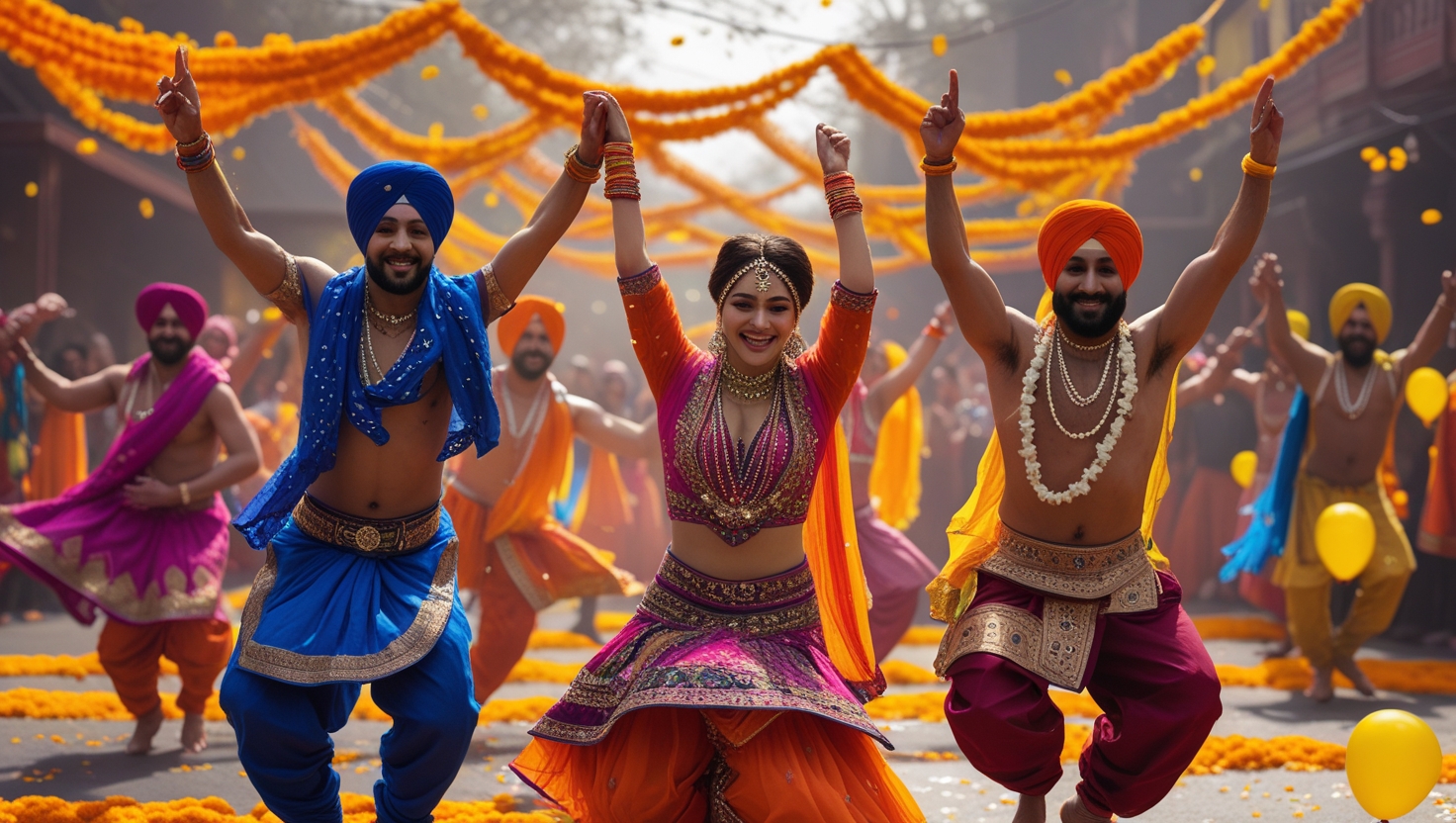
Baisakhi (Vaisakhi) is celebrated on 13 or 14 April as Punjab’s spring harvest festival and one of the holiest days in Sikhism: on Baisakhi in 1699, Guru Gobind Singh founded the Khalsa. Farmers give thanks for the wheat harvest with Bhangra and Giddha dancing, fairs and gurdwara prayers.
Quick facts: Baisakhi
| When | 13 or 14 April (solar calendar) |
|---|---|
| Region | Punjab and Sikh communities worldwide |
| Religious milestone | Founding of the Khalsa (1699) |
| Harvest | Rabi (wheat) thanksgiving |
| Signature dances | Bhangra and Giddha |
Significance of Baisakhi
Baisakhi carries a double meaning — thanksgiving for the rabi (wheat) harvest, and the birth of the Khalsa Panth, when Guru Gobind Singh initiated the first five Sikhs (Panj Pyare) at Anandpur Sahib. It also marks the solar new year in several Indian calendars.
History & origins
As a harvest festival Baisakhi is centuries old; its defining religious moment came on Baisakhi day 1699 at Anandpur Sahib. The festival is also tied to the Jallianwala Bagh massacre of 13 April 1919, remembered solemnly across India.
How Baisakhi is celebrated
Gurdwaras hold kirtan and akhand path, followed by nagar kirtan processions led by the Panj Pyare, with langar (community meals) served to all. In the countryside, the new harvest is celebrated with Bhangra and Giddha performances, wrestling bouts and village fairs.
Regional variations
- Punjab & Haryana: the principal harvest-and-Khalsa celebrations, centred on Anandpur Sahib and Amritsar.
- Same solar date across India: Tamil Nadu’s Puthandu, Kerala’s Vishu, Bengal’s Pohela Boishakh and Assam’s Bohag Bihu fall around the same day.
- Sikh diaspora: large Vaisakhi nagar kirtans in cities like Vancouver, London and Toronto.
Frequently asked questions about Baisakhi
What does Baisakhi celebrate?
Baisakhi celebrates Punjab’s wheat harvest and, for Sikhs, the founding of the Khalsa by Guru Gobind Singh on Baisakhi day in 1699 at Anandpur Sahib.
When is Baisakhi celebrated?
Baisakhi falls on 13 or 14 April each year, following the solar calendar — the same date as several regional new-year festivals across India.
What happens in gurdwaras on Baisakhi?
Gurdwaras hold special prayers and kirtan, organise nagar kirtan processions led by five Sikhs representing the Panj Pyare, and serve langar to the whole community.
What is the connection between Baisakhi and Bhangra?
Bhangra originated as a Punjabi harvest dance performed to celebrate Baisakhi; its energetic drum-driven style is now a global symbol of Punjabi culture.