Holi
Holi is the Hindu festival of colours that welcomes spring, usually in March. Over two days, people light bonfires (Holika Dahan) and then play with coloured powders and water. It celebrates the triumph of good over evil and the divine love of Radha and Krishna.
Quick facts: Holi
| Also known as | Festival of Colours, Festival of Love, Festival of Spring |
|---|---|
| When | Phalguna full moon — usually March |
| Duration | 2 days (Holika Dahan + Rangwali Holi) |
| Associated with | Radha–Krishna, Prahlada and Holika |
| Festive foods | Gujiya, thandai, malpua |
Significance of Holi
Holi commemorates the legend of Prahlada and Holika: the demoness Holika burned while the devotee Prahlada survived through faith in Vishnu, symbolising the victory of devotion and good over evil. In the Braj region it celebrates the playful love of Radha and Krishna. Socially, Holi dissolves barriers of caste, age and status as everyone plays together.
History & origins
Holi is mentioned in ancient texts and inscriptions dating back many centuries, with descriptions of spring colour festivals in classical Sanskrit literature and Mughal-era paintings depicting royal Holi celebrations.
How Holi is celebrated
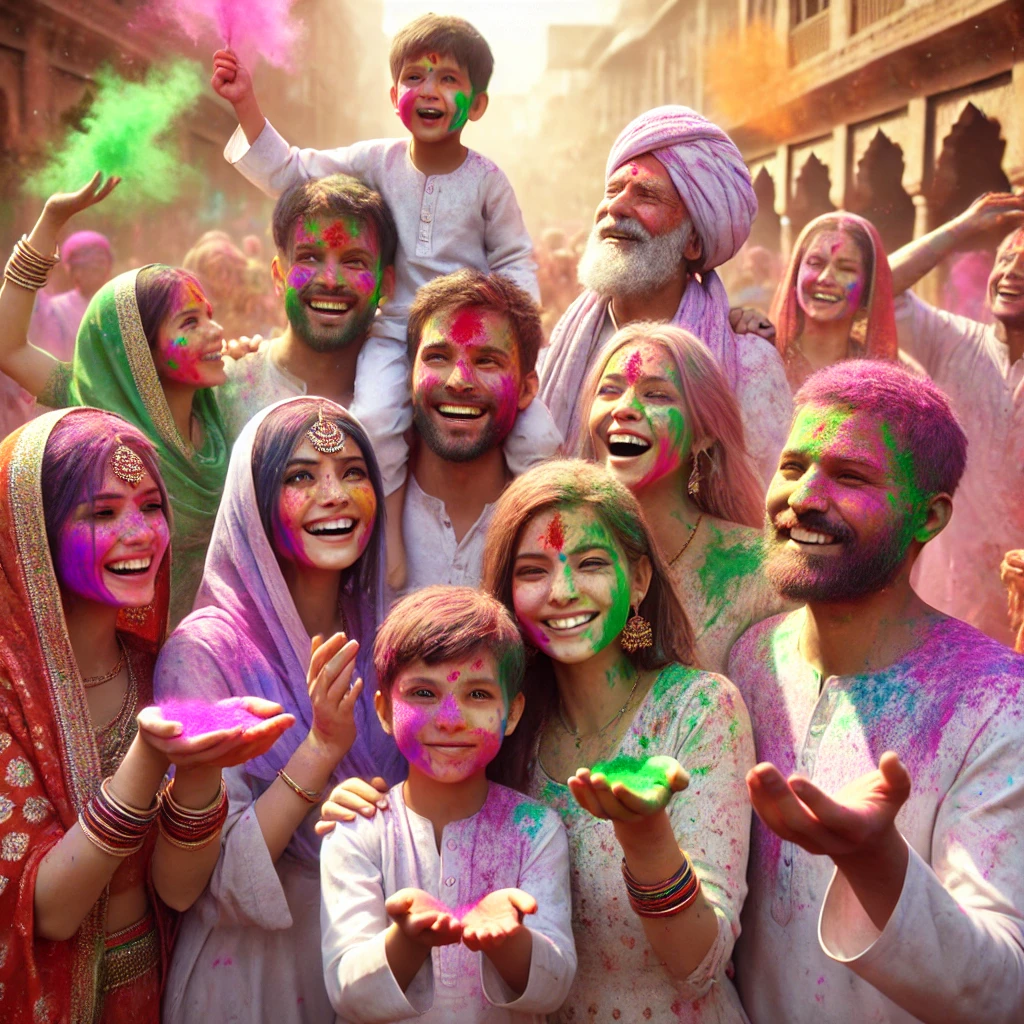
On the eve, communities gather around bonfires for Holika Dahan to symbolically burn away evil. The next day, Rangwali Holi, people smear and throw gulal (coloured powder), spray coloured water, dance to music, and share festive foods such as gujiya and the drink thandai.
Regional variations
- Braj (Mathura, Vrindavan, Barsana): famous Lathmar Holi and week-long Krishna celebrations.
- West Bengal: observed as Dol Jatra / Basanta Utsav with songs and processions.
- Punjab: linked with Hola Mohalla, featuring martial-arts displays by the Nihang Sikhs.
- Maharashtra: Rang Panchami, celebrated a few days after the main Holi.
Frequently asked questions about Holi
Why is Holi celebrated?
Holi celebrates the arrival of spring and the victory of good over evil, recalling the legend of Prahlada and Holika. In the Braj region it also celebrates the love of Radha and Krishna.
What is Holika Dahan?
Holika Dahan is the bonfire lit on the eve of Holi, symbolising the burning of the demoness Holika and the triumph of devotion and good over evil.
When is Holi celebrated?
Holi falls on the full-moon day (Purnima) of the Hindu month of Phalguna, typically in March.
What foods are eaten during Holi?
Popular Holi foods include gujiya (sweet dumplings), malpua, and the spiced milk drink thandai.