Dushera
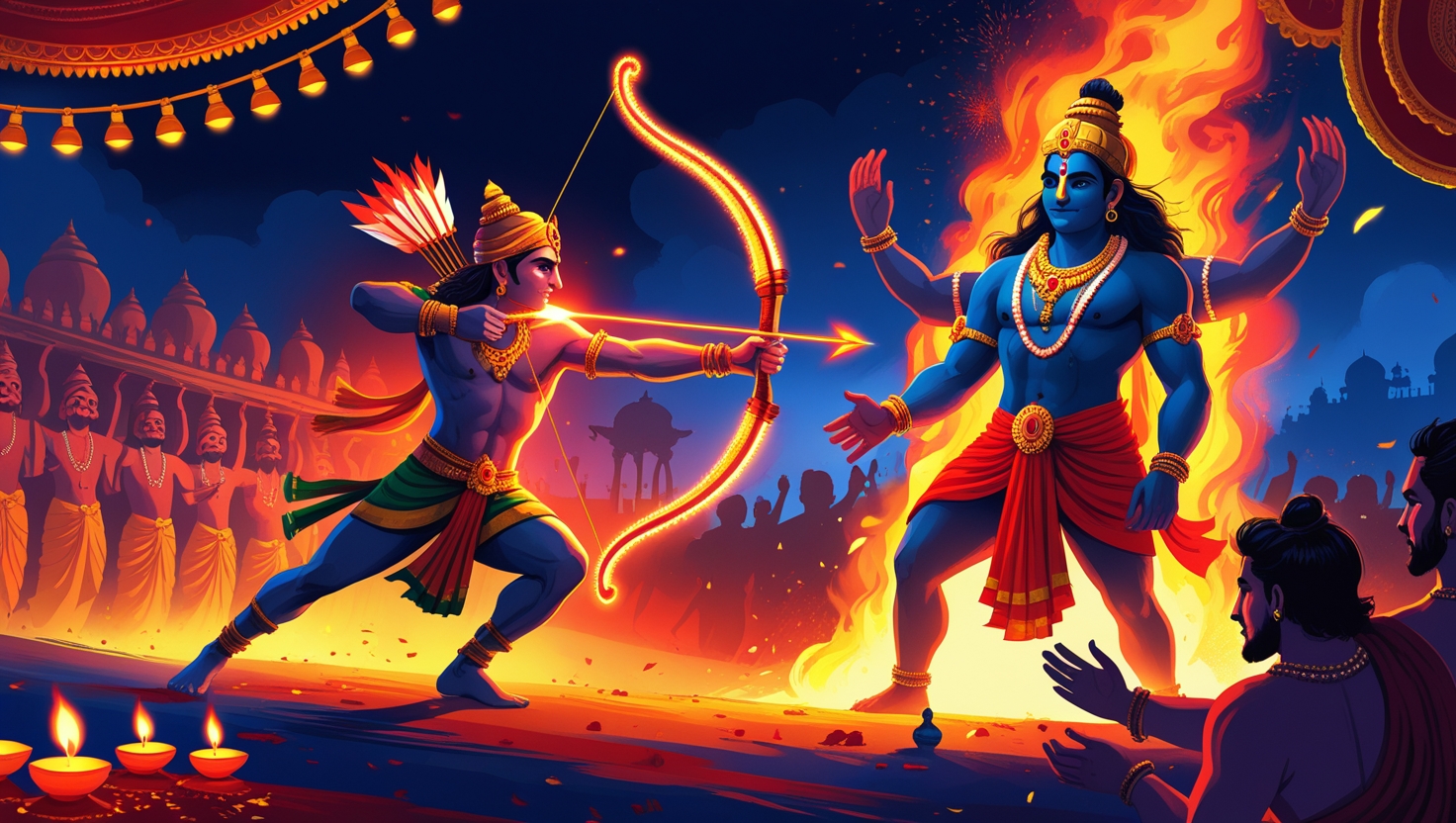
Dussehra, also called Vijayadashami, is a Hindu festival marking the victory of good over evil. Celebrated on the tenth day after Navratri (September–October), it commemorates Lord Rama’s defeat of the demon king Ravana and Goddess Durga’s victory over Mahishasura.
Quick facts: Dushera
| Also known as | Vijayadashami |
|---|---|
| When | Tenth day of Navratri — September/October |
| Commemorates | Rama over Ravana; Durga over Mahishasura |
| Signature event | Ramlila and Ravana effigy burning |
| Famous celebration | Mysuru Dasara |
Significance of Dushera
Dussehra carries two intertwined meanings: Rama’s triumph over Ravana (celebrated in North India) and Durga’s slaying of Mahishasura (celebrated in the East). Both narratives affirm the victory of righteousness (dharma) over evil and arrogance.
History & origins
The Rama–Ravana and Durga–Mahishasura traditions are rooted in the Ramayana and the Devi Mahatmya. Royal Dussehra processions, such as the Mysuru Dasara, have been documented for centuries and remain grand state celebrations today.
How Dushera is celebrated
In North India, Ramlila plays re-enact the Ramayana over the preceding days, culminating in the burning of towering effigies of Ravana, Meghnad and Kumbhakarna filled with firecrackers. In the East, Durga idols are taken in procession and immersed. It is also considered an auspicious day to begin new endeavours.
Regional variations
- North India: Ramlila and the burning of Ravana effigies.
- Mysuru (Karnataka): the royal Mysuru Dasara with a grand caparisoned-elephant procession.
- West Bengal: marks Durga’s immersion (Bijoya Dashami).
- Himachal (Kullu): the week-long Kullu Dussehra, a famous fair.
Frequently asked questions about Dushera
What does Dussehra celebrate?
Dussehra (Vijayadashami) celebrates the victory of good over evil — Lord Rama’s defeat of Ravana in North India and Goddess Durga’s victory over the demon Mahishasura in the East.
Why are effigies burned on Dussehra?
Tall effigies of Ravana, Meghnad and Kumbhakarna are burned to symbolise the destruction of evil and the triumph of righteousness, marking the climax of the Ramlila.
What is the difference between Dussehra and Diwali?
Dussehra marks Rama’s victory over Ravana; Diwali, twenty days later, celebrates Rama’s return to Ayodhya with lamps. Dussehra is about the victory, Diwali about the homecoming.
When is Dussehra celebrated?
Dussehra falls on the tenth day (Dashami) after Navratri, in the month of Ashvin, usually September or October.