Bakrid
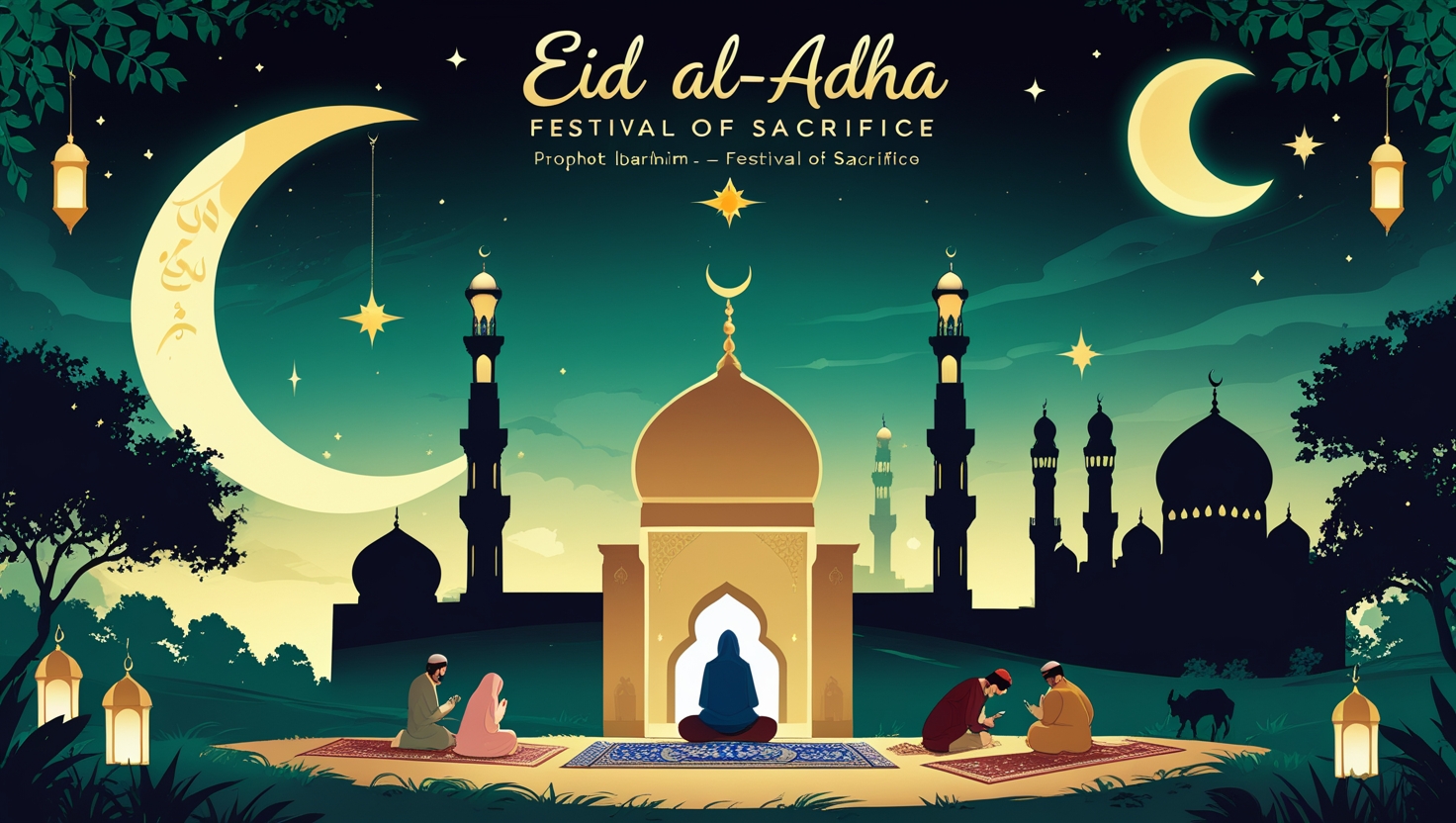
Bakrid, known globally as Eid al-Adha or the Festival of Sacrifice, is one of the two major Islamic festivals celebrated in India. It commemorates Prophet Ibrahim’s (Abraham’s) willingness to sacrifice his son in obedience to God, and coincides with the completion of the Hajj pilgrimage to Mecca.
Quick facts: Bakrid
| Also known as | Eid al-Adha, Eid-ul-Zuha, Festival of Sacrifice |
|---|---|
| When | 10th of Dhu al-Hijjah (Islamic lunar calendar) |
| Commemorates | Prophet Ibrahim’s devotion; end of Hajj |
| Key ritual | Qurbani, with a third of the meat for the poor |
| Festive foods | Biryani, korma, kebabs, sheer khurma |
Significance of Bakrid
Eid al-Adha honours ultimate faith and submission to God: as Ibrahim prepared to sacrifice his son, God provided a ram instead. The qurbani (ritual sacrifice) that marks the day embodies sharing — the meat is divided in three parts: for the family, for relatives and friends, and for the poor.
History & origins
Eid al-Adha has been observed since the earliest days of Islam and in India for over a millennium. The name “Bakrid” is popular in South Asia, from “bakri” (goat), reflecting the animal most commonly offered in qurbani here.
How Bakrid is celebrated
The day begins with Eid namaz at mosques and idgahs, followed by the qurbani of a goat or sheep by families who can afford it, with a third of the meat given to the needy. Homes prepare biryani, korma, kebabs and sweets; relatives visit and exchange greetings of “Eid Mubarak” over two to three days of festivities.
Regional variations
- Observed across India; dates follow the Islamic lunar calendar (10th of Dhu al-Hijjah).
- Hyderabad, Lucknow, Delhi and Kolkata are noted for their festive Eid food traditions.
- The festival coincides with the Hajj — Indian pilgrims in Mecca celebrate there.
Frequently asked questions about Bakrid
What does Bakrid celebrate?
Bakrid (Eid al-Adha) commemorates Prophet Ibrahim’s willingness to sacrifice his son at God’s command — God provided a ram instead — and marks the completion of the annual Hajj pilgrimage.
Why is it called Bakrid in India?
The South Asian name comes from “bakri” (goat), the animal most commonly offered in the qurbani sacrifice in India.
What happens to the qurbani meat?
It is traditionally divided into three parts: one for the family, one for relatives and friends, and one for the poor — making charity central to the festival.
How is Bakrid different from Eid al-Fitr?
Eid al-Fitr ends the Ramadan fast; Eid al-Adha (Bakrid) is the festival of sacrifice about two months later, tied to the Hajj pilgrimage rather than to fasting.