
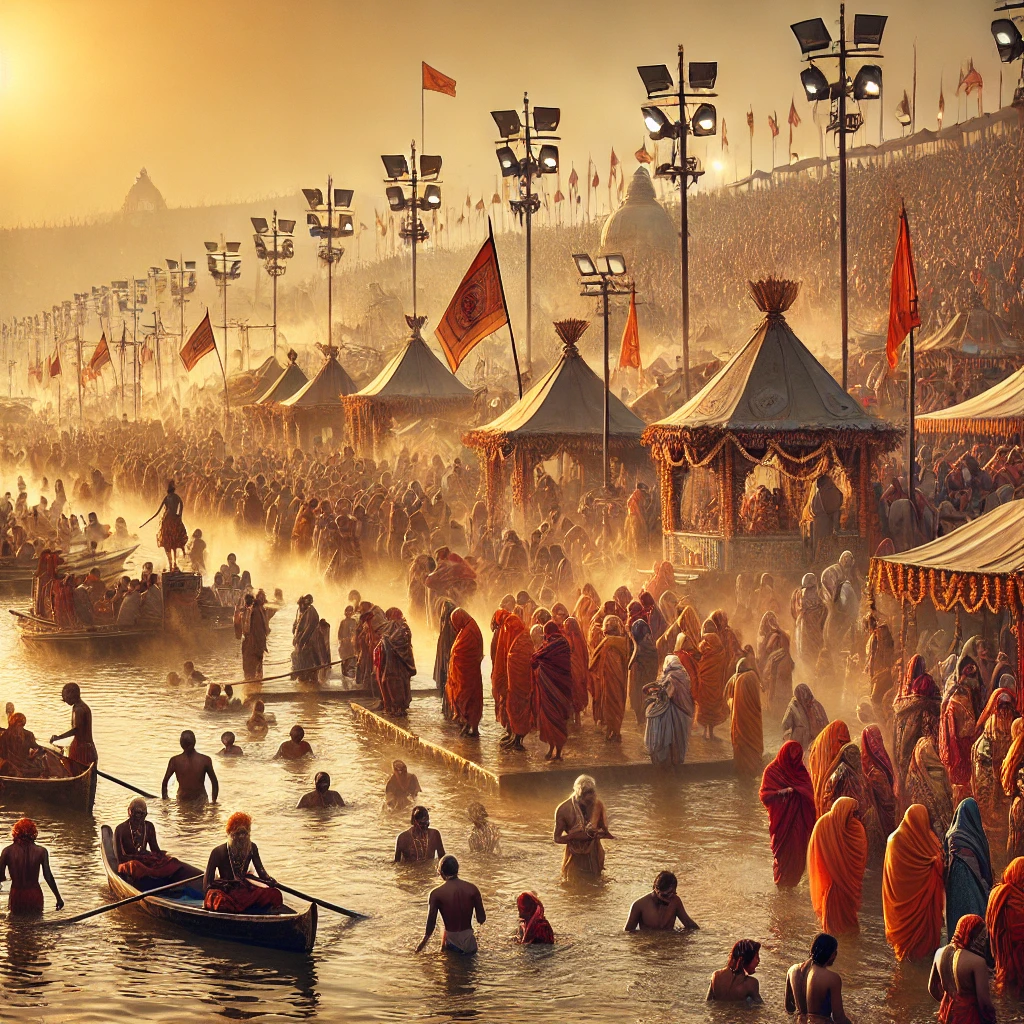
Kumbh Mela
Kumbh Mela is the largest religious gathering on Earth, drawing tens of millions of Hindu pilgrims to bathe at sacred river confluences. It rotates between four cities — Prayagraj, Haridwar, Ujjain and Nashik — roughly every three years, with the grand Maha Kumbh at Prayagraj every 144 years.
Quick facts: Kumbh Mela
| Scale | World’s largest human gathering (crores of pilgrims) |
|---|---|
| Sites | Prayagraj, Haridwar, Ujjain, Nashik |
| Cycle | Purna Kumbh every 12 years per site; Ardh Kumbh at 6 |
| Key ritual | Shahi snan — the royal bath at the confluence |
| Recognition | UNESCO Intangible Cultural Heritage (2017) |
Significance of Kumbh Mela
The festival stems from the legend of the samudra manthan (churning of the cosmic ocean), when drops of the nectar of immortality (amrita) fell at the four Kumbh sites. Bathing in the rivers during the Kumbh — especially at the Sangam, the confluence of the Ganga, Yamuna and mythical Saraswati at Prayagraj — is believed to cleanse sins and aid liberation (moksha).
History & origins
Riverside bathing festivals are described in ancient texts, and the travelling Chinese scholar Xuanzang recorded a great gathering at Prayag in the 7th century CE. The organised akhara processions took shape over the medieval period. UNESCO inscribed Kumbh Mela on its Intangible Cultural Heritage list in 2017. The Prayagraj Maha Kumbh of 2025 drew crowds in the hundreds of millions over its weeks-long duration.
How Kumbh Mela is celebrated
The mela unfolds over several weeks around key bathing dates (shahi snan), when processions of sadhus — including the ash-smeared Naga sadhus of the akharas — lead the ritual dip at dawn. A vast temporary tent city rises on the riverbanks with camps, discourses, devotional music and community kitchens (langars) feeding millions.
Regional variations
- Prayagraj (Uttar Pradesh): at the Sangam — hosts the largest Kumbh and the rare Maha Kumbh.
- Haridwar (Uttarakhand): on the Ganga, where the river descends from the Himalaya.
- Ujjain (Madhya Pradesh): the Simhastha Kumbh on the Shipra river.
- Nashik-Trimbakeshwar (Maharashtra): on the Godavari river.
Frequently asked questions about Kumbh Mela
What is the Kumbh Mela?
Kumbh Mela is a Hindu pilgrimage festival and the world’s largest religious gathering, centred on ritual bathing at sacred rivers. It rotates between Prayagraj, Haridwar, Ujjain and Nashik.
Why do pilgrims bathe at the Kumbh?
Bathing at the sacred confluences during the Kumbh is believed to wash away sins and help attain moksha, commemorating the spots where drops of the nectar of immortality fell in the samudra manthan legend.
How often does the Kumbh Mela happen?
Each of the four sites hosts a Purna Kumbh every 12 years, with an Ardh (half) Kumbh at six-year intervals at Prayagraj and Haridwar; a Maha Kumbh at Prayagraj occurs after 12 Purna Kumbhs (144 years).
Who are the Naga sadhus?
Naga sadhus are ascetic warrior-monks of the Hindu akharas, recognisable by their ash-covered bodies. They traditionally lead the shahi snan processions on the main bathing days.