Ganesh Chaturthi
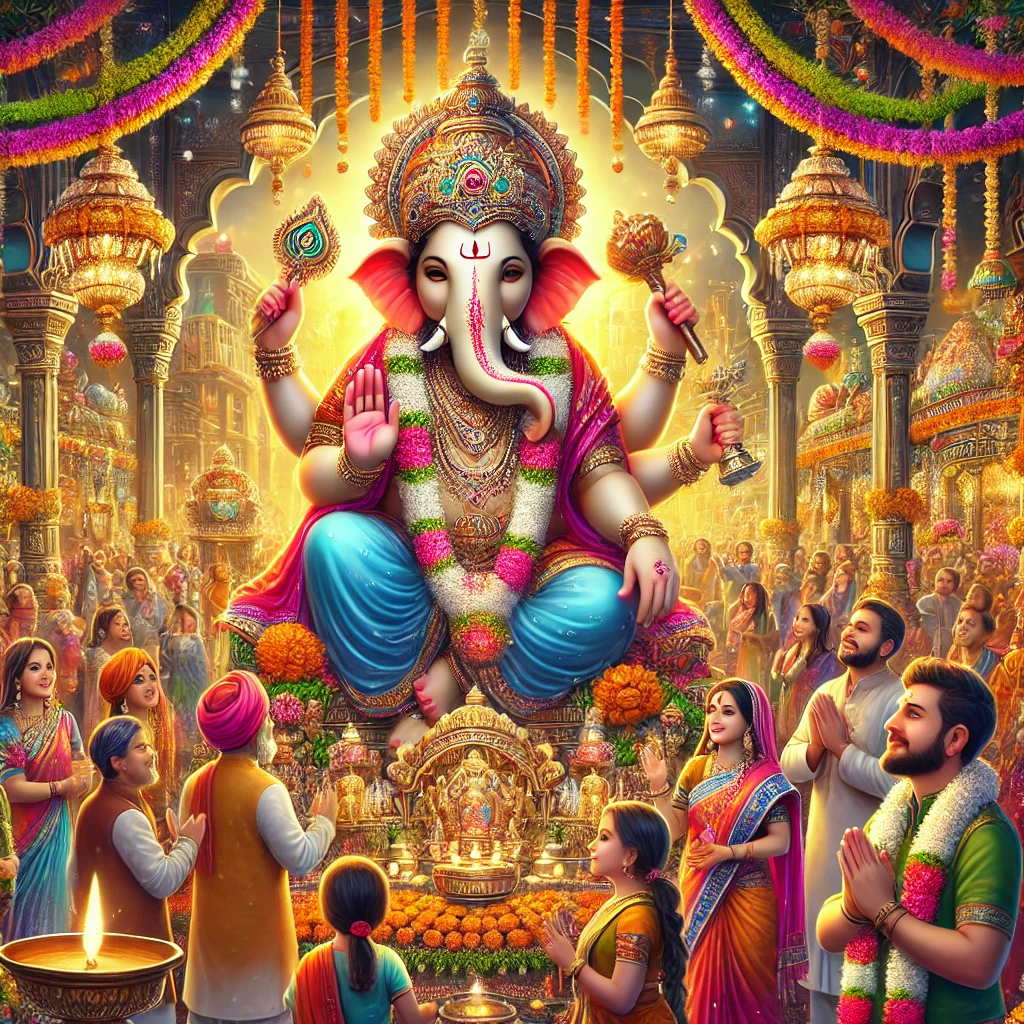
Ganesh Chaturthi is a ten-day Hindu festival celebrating the birth of Lord Ganesha, the elephant-headed god of wisdom and the remover of obstacles. Celebrated in August or September, it features elaborately crafted clay idols, daily worship, and a grand immersion (Visarjan) on the final day.
Quick facts: Ganesh Chaturthi
| Honours | Lord Ganesha (Vighnaharta) |
|---|---|
| When | Bhadrapada month — August/September |
| Duration | Up to 10 days, ending with Visarjan |
| Signature offering | Modak |
| Popularised by | Bal Gangadhar Tilak (1893) |
Significance of Ganesh Chaturthi
Ganesha is invoked at the start of new ventures as Vighnaharta, the remover of obstacles, and the god of wisdom and beginnings. The festival celebrates his birth and, through the immersion of clay idols, reflects the cycle of creation and dissolution.
History & origins
While household worship of Ganesha is ancient, the large public celebration was popularised in Maharashtra by Lokmanya Bal Gangadhar Tilak in 1893 as a way to foster community unity and national spirit during the freedom movement.
How Ganesh Chaturthi is celebrated
Devotees install clay Ganesha idols in homes and public pandals, perform daily aarti and offer modak (Ganesha’s favourite sweet). Over the days, communities hold cultural programmes. On the final day the idols are carried in joyful processions and immersed in water (Ganesh Visarjan) with chants of “Ganpati Bappa Morya”.
Regional variations
- Maharashtra: the largest celebrations, with massive public pandals in Mumbai and Pune.
- Goa: celebrated as Chavath with traditional home worship.
- Telangana & Andhra Pradesh: grand idols in Hyderabad, including the famous Khairatabad Ganesha.
- Karnataka & Tamil Nadu: widely observed with home and temple worship.
Frequently asked questions about Ganesh Chaturthi
What is Ganesh Chaturthi?
Ganesh Chaturthi is a ten-day Hindu festival celebrating the birth of Lord Ganesha, the remover of obstacles. Devotees install clay idols, offer modak, and immerse the idols in water on the final day (Visarjan).
Why are Ganesha idols immersed in water?
The immersion (Visarjan) symbolises Ganesha’s return to his abode and the cycle of creation and dissolution. Traditionally clay idols dissolve naturally in the water.
What is modak?
Modak is a sweet dumpling filled with coconut and jaggery, considered Lord Ganesha’s favourite offering during the festival.
When is Ganesh Chaturthi celebrated?
It falls in the Hindu month of Bhadrapada, usually in August or September.