Diwali
Diwali (Deepavali) is the Indian festival of lights, celebrated over five days in October or November. It symbolises the victory of light over darkness and good over evil. Homes are lit with diyas and rangoli, families exchange sweets, and Goddess Lakshmi is worshipped for prosperity.
Quick facts: Diwali
| Also known as | Deepavali, Festival of Lights |
|---|---|
| When | Kartik month — October or November (new moon / Amavasya) |
| Duration | 5 days |
| Main deities | Lakshmi, Ganesha, Rama |
| Celebrated by | Hindus, Jains, Sikhs, Newar Buddhists |
Significance of Diwali
Diwali marks several events across traditions: in North India it celebrates Lord Rama’s return to Ayodhya after defeating Ravana; in others it honours Goddess Lakshmi, the deity of wealth and prosperity, and Lord Ganesha. For Jains it marks Mahavira’s attainment of moksha, and for Sikhs it coincides with Bandi Chhor Divas. Across all, the lighting of lamps represents the inner light that protects against spiritual darkness.
History & origins
References to a festival of lights appear in Sanskrit texts and travelogues over two millennia old. The festival consolidated around the Lakshmi-puja and Rama-Ayodhya narratives during the medieval period and is now observed by Hindus, Jains, Sikhs and Newar Buddhists worldwide.
How Diwali is celebrated
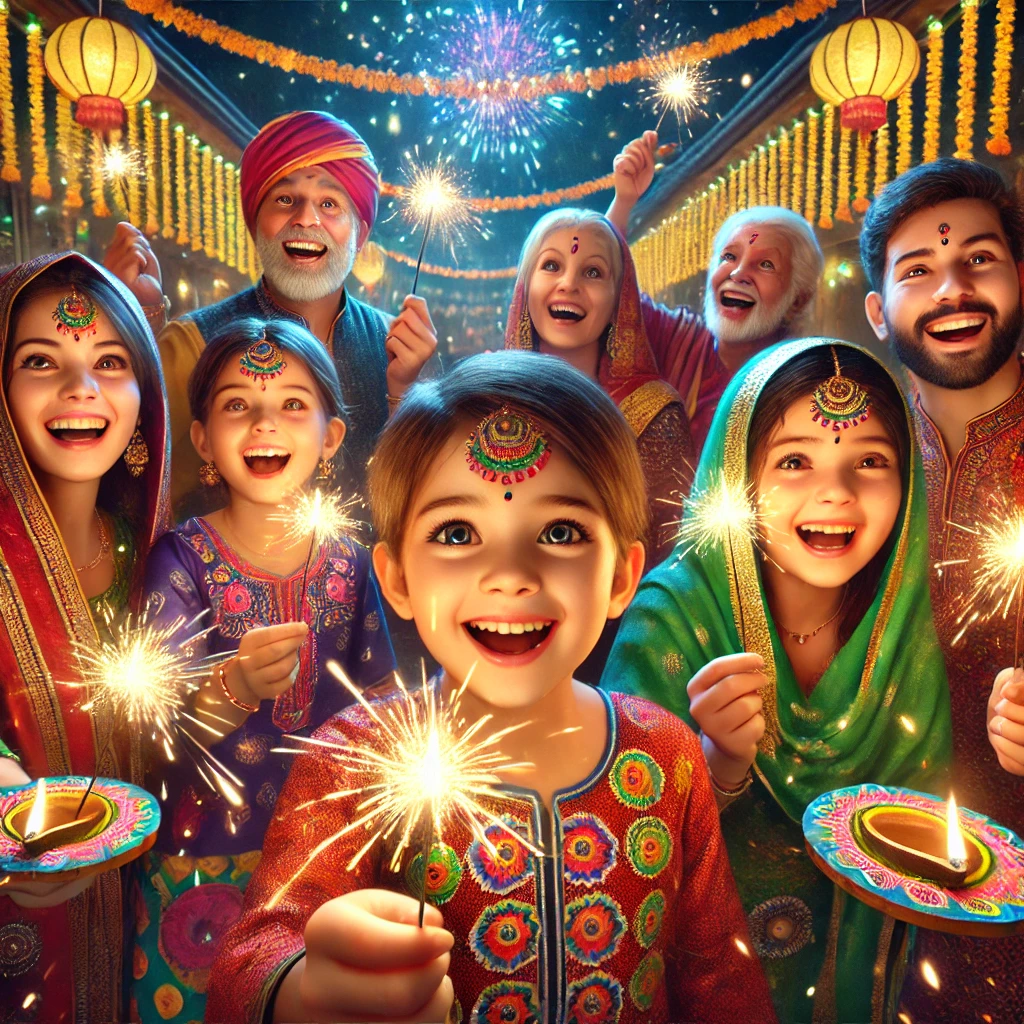
The five days are Dhanteras (buying metals, worship of health and wealth), Naraka Chaturdashi (Choti Diwali), Lakshmi Puja (the main night of lamps and fireworks), Govardhan Puja/Annakut, and Bhai Dooj (celebrating the bond between siblings). Families clean and decorate homes, draw rangoli, light rows of diyas, perform Lakshmi-Ganesh puja, share sweets such as ladoo and barfi, and exchange gifts.
Regional variations
- North India: celebrates Rama’s return to Ayodhya; grand fireworks and Lakshmi Puja.
- West India (Gujarat): marks the start of the new business/accounting year (Bestu Varas).
- South India: centres on Naraka Chaturdashi and the defeat of the demon Narakasura, with an oil bath at dawn.
- East India (Bengal, Odisha): coincides with Kali Puja, worshipping Goddess Kali.
Frequently asked questions about Diwali
Why is Diwali celebrated?
Diwali celebrates the victory of light over darkness and good over evil. In North India it marks Lord Rama’s return to Ayodhya; more widely it honours Goddess Lakshmi for prosperity. Lighting lamps symbolises dispelling spiritual darkness.
How many days is Diwali?
Diwali is celebrated over five days: Dhanteras, Naraka Chaturdashi (Choti Diwali), Lakshmi Puja (the main day), Govardhan Puja, and Bhai Dooj.
When is Diwali celebrated?
Diwali falls on the new-moon night (Amavasya) of the Hindu month of Kartik, usually in October or November in the Gregorian calendar.
Which goddess is worshipped on Diwali?
Goddess Lakshmi, the deity of wealth and prosperity, is worshipped on the main night of Diwali, often alongside Lord Ganesha.